
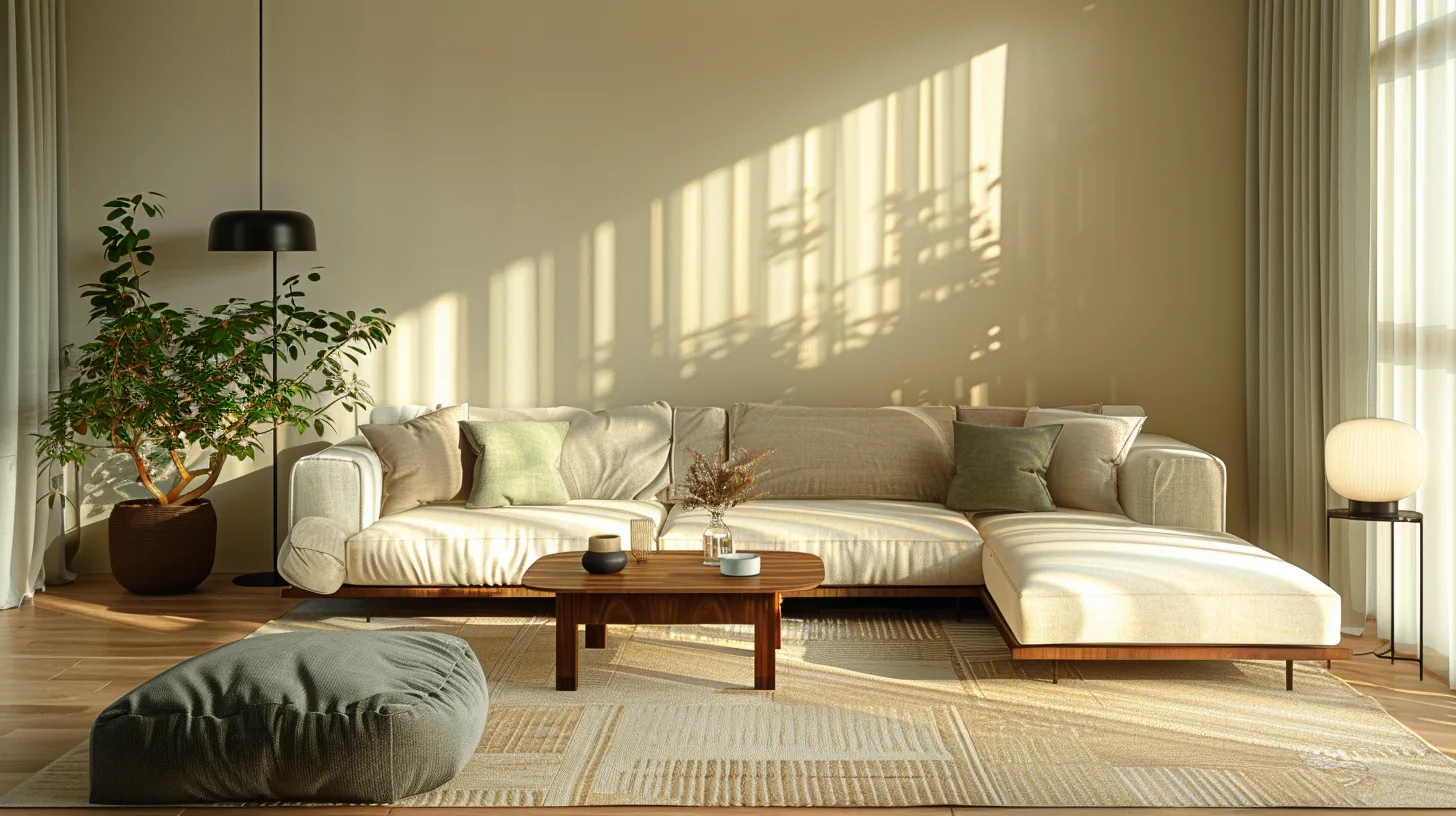
Finding the best colors for a Japandi living room is the single most transformative step you can take when designing a sanctuary that balances Japanese minimalism with Scandinavian hygge.
This design aesthetic is not merely about white walls or wood furniture; it relies on a sophisticated, restrained palette that prioritizes tranquility, warmth, and a deep connection to nature.
Unlike stark minimalist whites that can feel clinical, Japandi colors are nuanced, earthy, and intentionally chosen to foster a sense of calm, grounding, and emotional well-being.
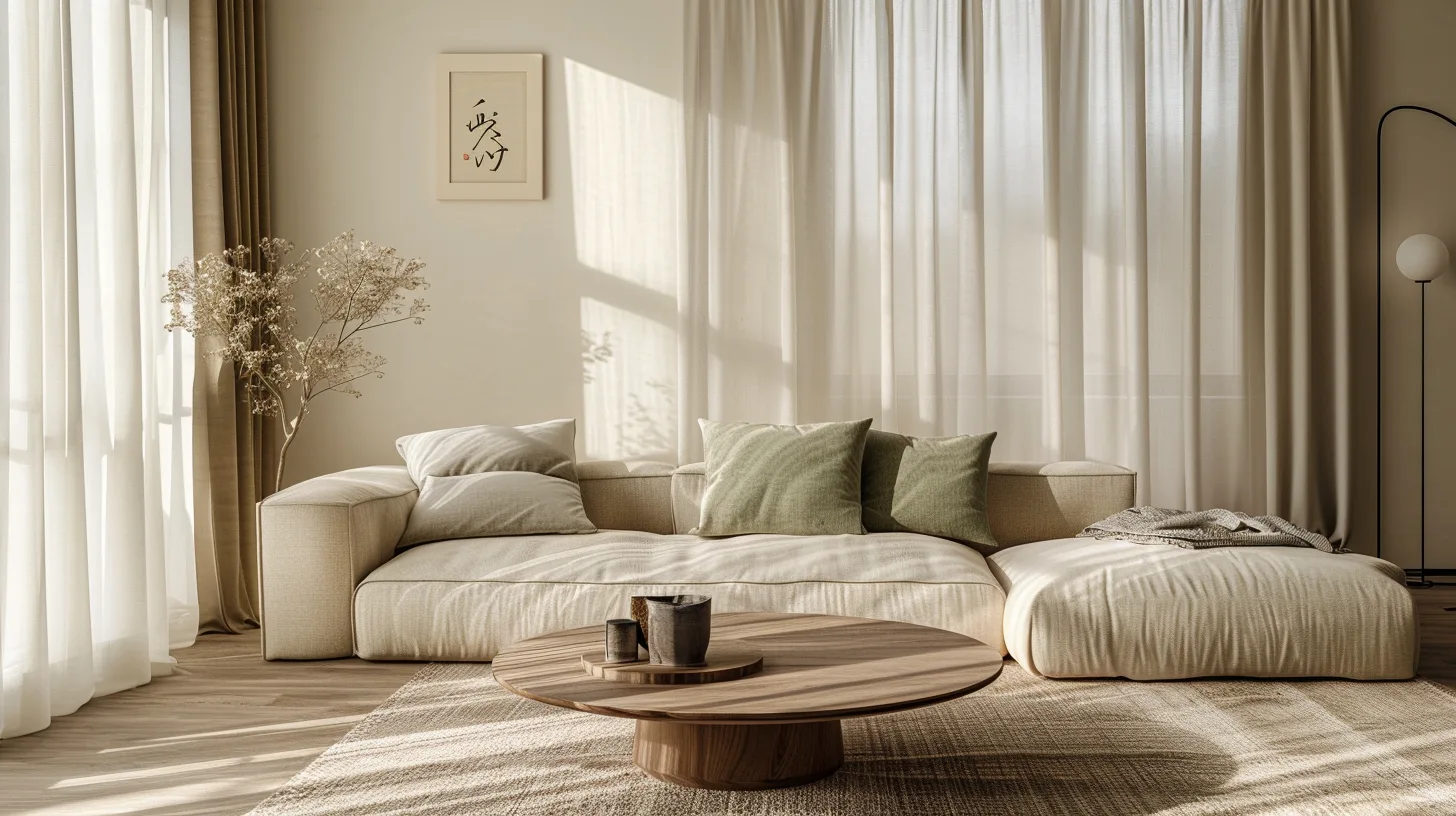
Table of Contents
The Foundation: Warm Neutrals and Soft Whites
The canvas of any authentic Japandi living room begins with warm, soothing neutrals. The stark, clinical bright whites often seen in modern minimalism are replaced here by softer, creamier alternatives that reflect light gently and create a cozy atmosphere. Shades like off-white, soft beige, oatmeal, and warm stone serve as the perfect backdrop, allowing furniture silhouettes and natural textures to take center stage without visual competition.
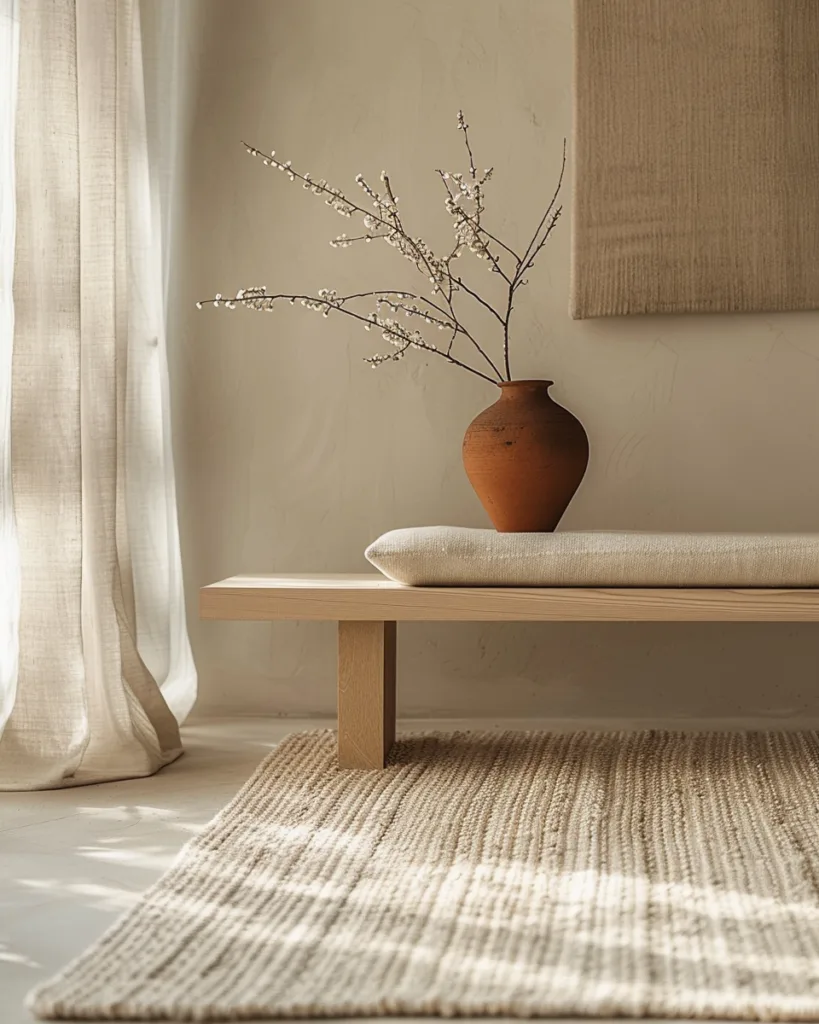
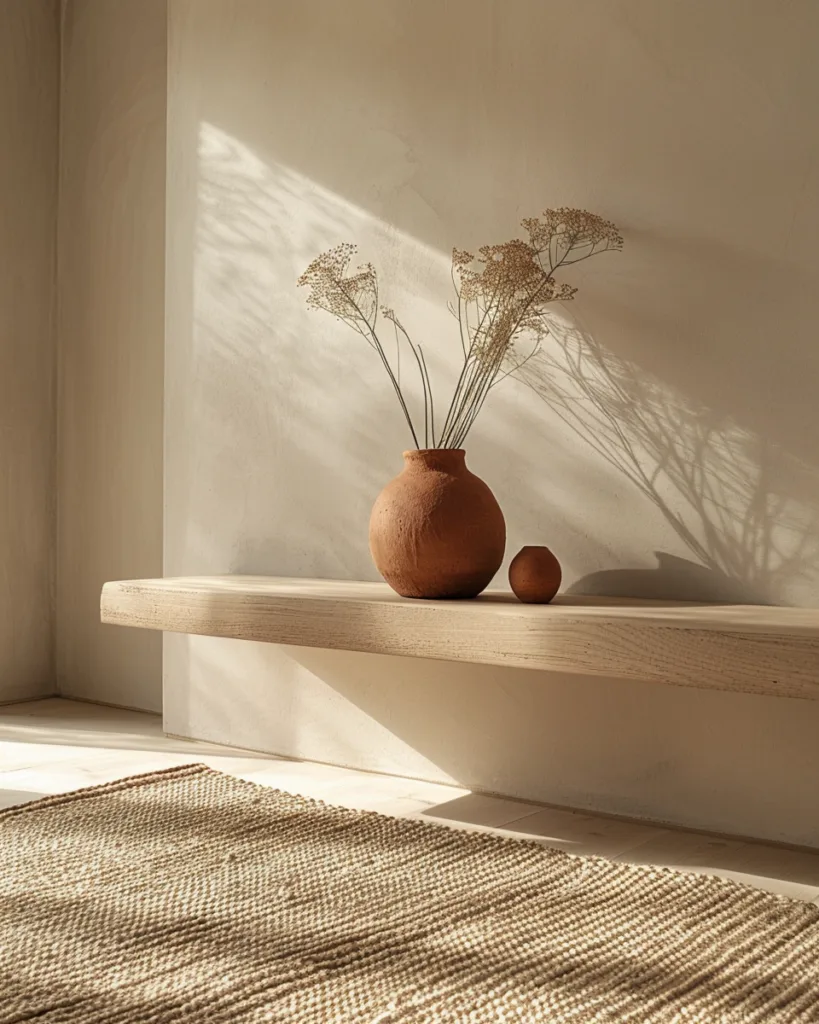
These base colors are not just “blank” spaces; they set the emotional tone of the room. A warm taupe or greige (gray-beige) wall color can instantly make a large living room feel intimate and enveloping—a core principle of Scandinavian design known as hygge. By keeping the largest surface areas—walls, ceilings, and large area rugs—in these hushed tones, you create a continuous visual flow. This uniformity expands the space visually while maintaining a serene, cohesive environment that feels like a warm embrace rather than an empty box.
Why Undertones Matter
When selecting your base neutrals, paying attention to undertones is crucial. Japandi neutrals should lean towards yellow, red, or brown undertones rather than blue or green. A white paint with a subtle creamy or peachy undertone will feel inviting and warm, especially in natural light, whereas a cool white might feel too crisp and energetic for a relaxation space.
- Recommended Base Shades: Cream, Alabaster, Oatmeal, Linen, Biscuit, Putty.
- Avoid: Stark Blue-Whites, Cool Grays, Bright Yellow-Whites.
Grounding Earth Tones
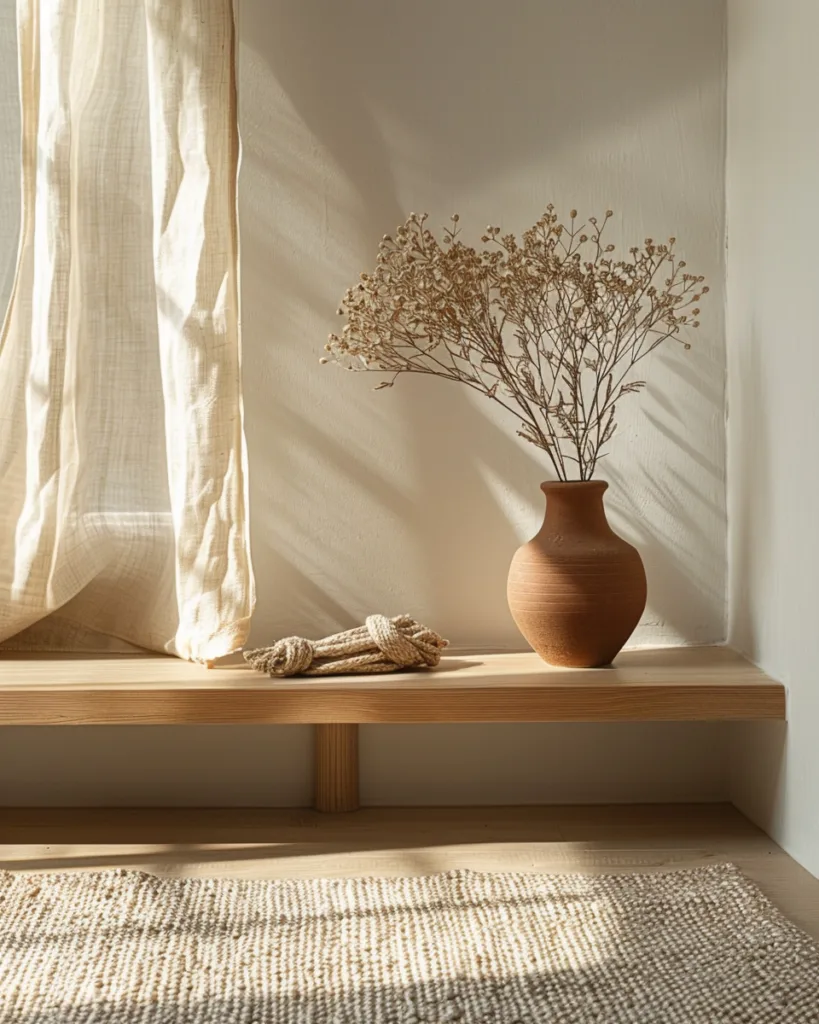
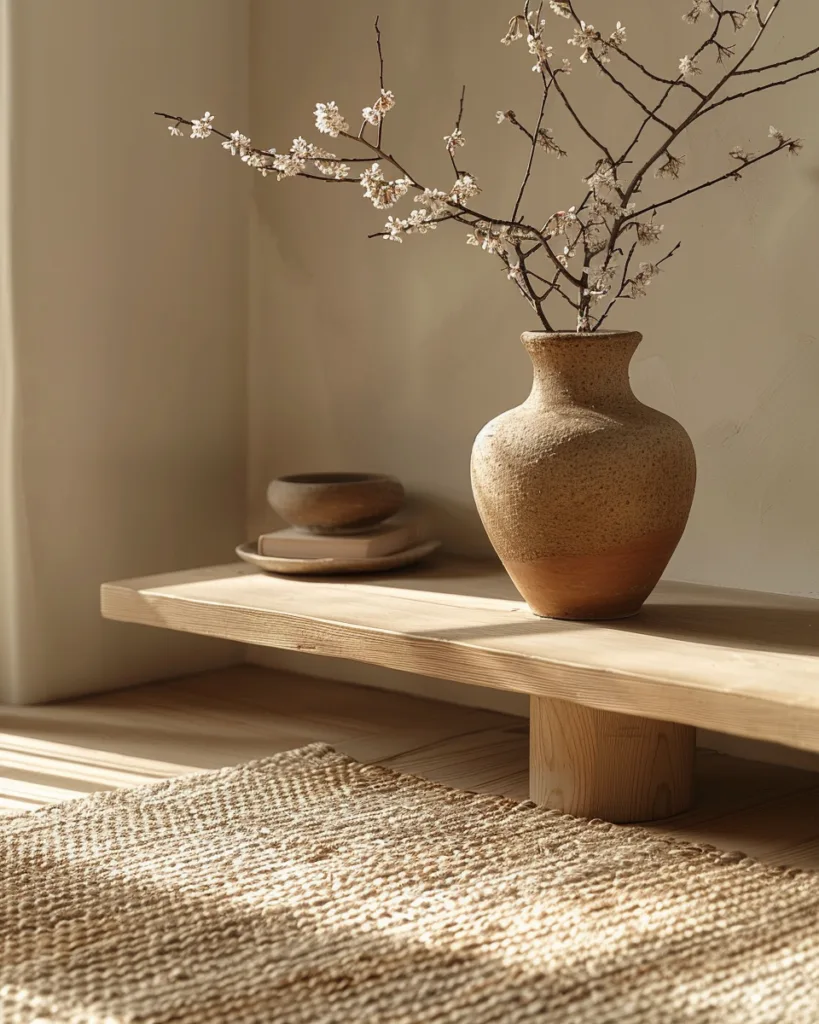
To prevent a neutral room from feeling flat or washed out, Japandi style introduces deeper earth tones that ground the aesthetic. These colors draw directly from the landscape, incorporating organic hues like terracotta, warm walnut brown, soft clay, chestnut, and sandy tan. These deeper tones add necessary weight to the room, anchoring the lighter elements and preventing the space from feeling floating or ephemeral.
These grounding colors are often introduced through substantial furniture pieces—such as a low-profile solid wood coffee table—or through textiles like chunky wool throws, leather ottomans, and linen cushions. The interplay of wood tones is particularly crucial here. Light woods like white oak, ash, or birch (typical of Scandi design) blend seamlessly with the richer, darker woods often found in traditional Japanese interiors (like cedar, stained walnut, or charred wood). This mixture of wood tones acts as a “color” in itself, adding warmth, pattern, and organic complexity to the palette without needing a drop of paint.
Incorporating “Imperfect” Colors
Japandi celebrates wabi-sabi, the beauty of imperfection. This philosophy extends to color. “Perfect” saturated colors can feel artificial. Instead, look for colors that feel slightly “muddy” or complex—a brown that looks like wet earth, a gray that hints at storm clouds, or a tan that resembles dried grass. These complex, imperfect colors feel more natural and restful to the eye.
Nature-Inspired Accents
While Japandi is famously restrained, it is certainly not devoid of color. The best accent colors are muted, “dusty,” or desaturated versions of colors found in nature. These accents breathe life into the neutral foundation without breaking the serene spell.
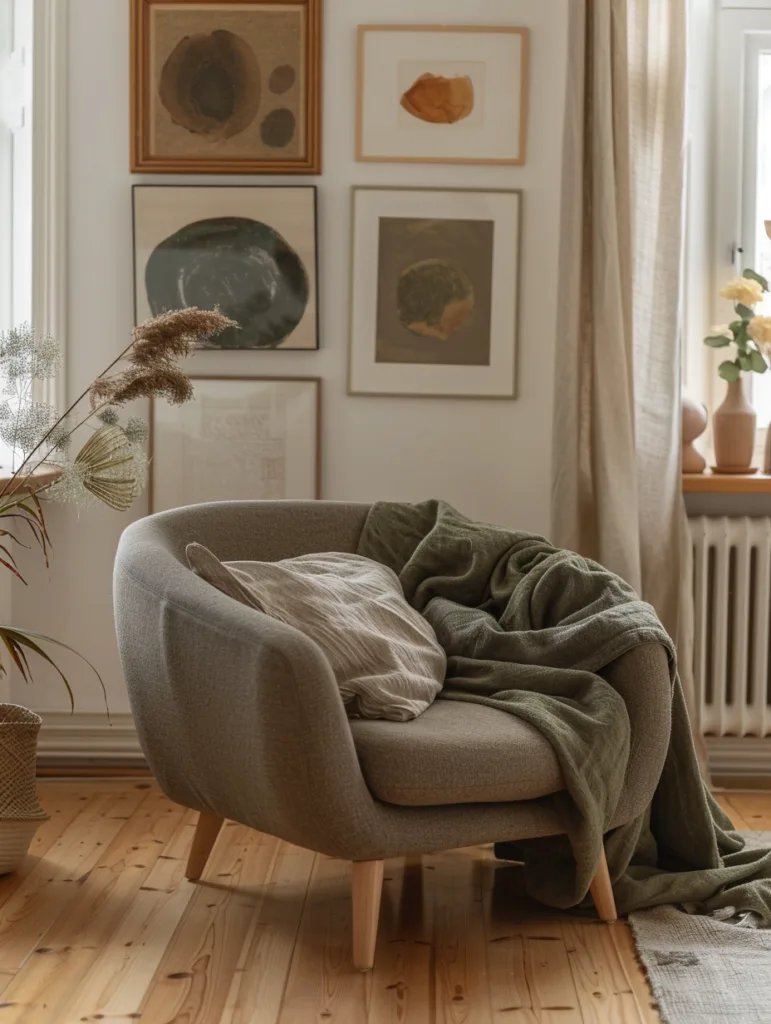
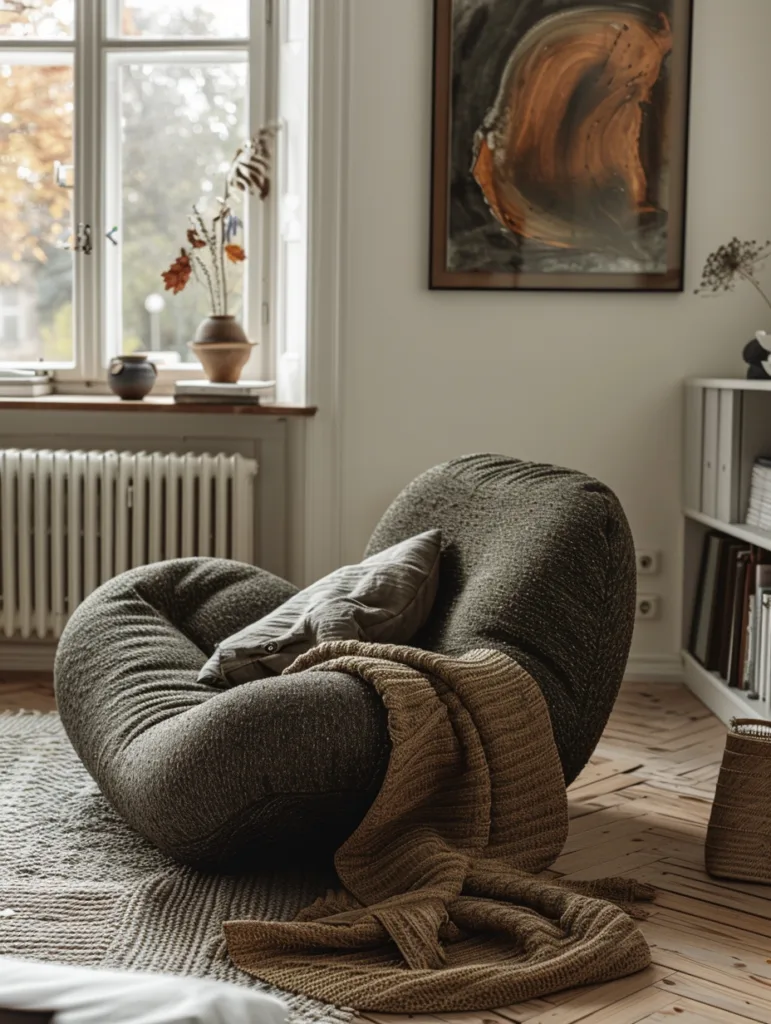
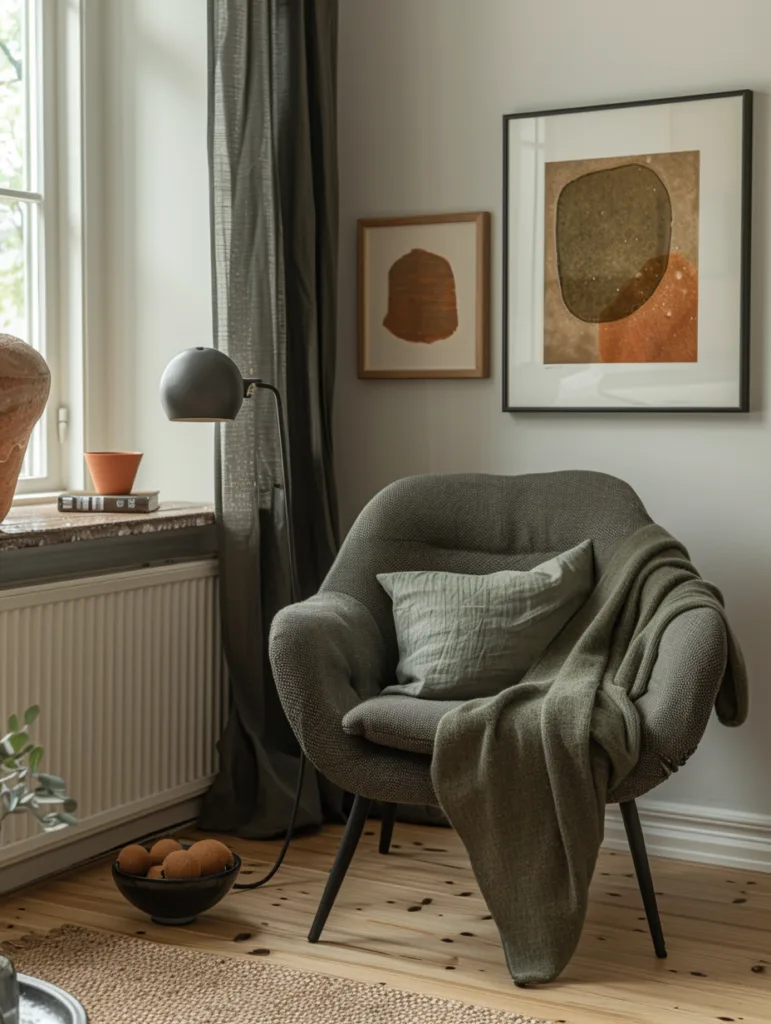
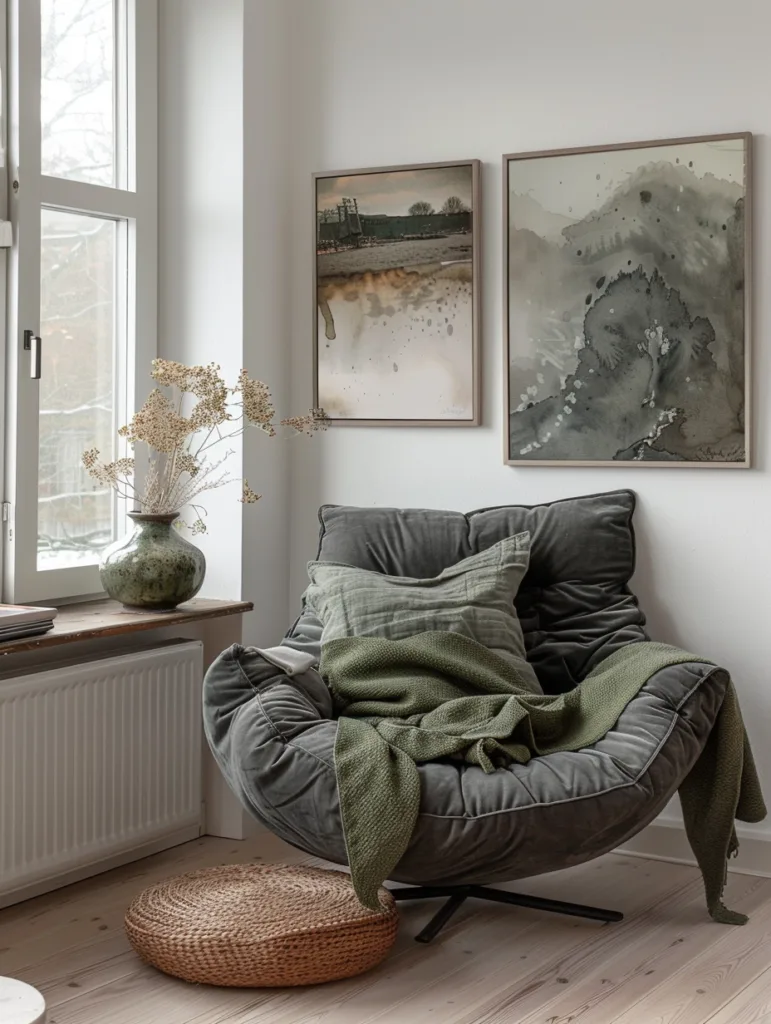
- Greens: Sage, moss, olive, and eucalyptus are the most popular accent choices. They bring the outdoors in and reinforce the biophilic connection essential to wellness. A sage green accent wall or a moss-colored velvet armchair acts as a bridge between your interior and the natural world outside your window.
- Blues: Slate blue, misty gray-blue, and deep indigo offer a cool, calming contrast to the warm wood tones. Indigo, in particular, has a rich history in Japanese textiles (shibori) and adds a layer of cultural depth and sophistication.
- Pinks & Reds: Dusty rose, blush, clay, and pale plaster pink add a layer of softness and Scandinavian warmth without being overly sweet or feminine. These tones mimic the colors of dawn, sunsets, or raw ceramics, fitting perfectly within the earthy palette.
These accents should be used sparingly and intentionally—think a single statement vase, a curated stack of art books, or a throw pillow—to maintain the “zen” quality of the space. The goal is a whisper of color, not a shout.
Creating Contrast with Darker Hues
A key element often borrowed from Japanese design is the bold use of contrast to define and structure space. Darker hues like charcoal, soft black, darker espresso, and deep midnight blue are used as “punctuation marks” within the room. Without these darker elements, a beige-on-beige room can risk looking monotonous or undefined.
A matte black lamp fixture, a dark framed art print, black metal legs on a coffee table, or a charcoal ceramic bowl provide a graphic anchor that sharpens the soft neutral palette. This high-contrast approach creates a visual hierarchy, guiding the eye to specific focal points. It prevents the room from looking too “safe” and adds a modern, sophisticated edge.
The secret is balance; these dark tones should never dominate the room. They should serve to outline and highlight the lighter elements, creating a sense of depth. Think of calligraphy ink on white paper—the dark stroke defines the negative space around it.
Color Psychology in Japandi Living Rooms
The selection of the best colors for a Japandi living room goes beyond aesthetics; it is deeply rooted in color psychology. The goal of a Japandi space is to induce a state of calm alertness—relaxed but present.
- Warm Neutrals (Beige, Sand): Evoke feelings of safety, reliability, and comfort. They lower cortisol levels and help the nervous system decompress after a busy day.
- Greens (Sage, Olive): Promote restoration and balance. Green is the easiest color for the human eye to process, reducing strain and encouraging mental rest.
- Blues (Slate, Indigo): Encourage introspection, focus, and tranquility. Deep blues can slow the heart rate and lower blood pressure, making them ideal for a space dedicated to unwinding.
- Black/Charcoal: In small doses, these colors convey strength, elegance, and grounding. They provide a sense of protection and containment.
By thoughtfully combining these psychological triggers, a Japandi color palette actively works to improve your mood and mental state, turning your living room into a true sanctuary for mental health.
Mastering the 60-30-10 Rule for Japandi
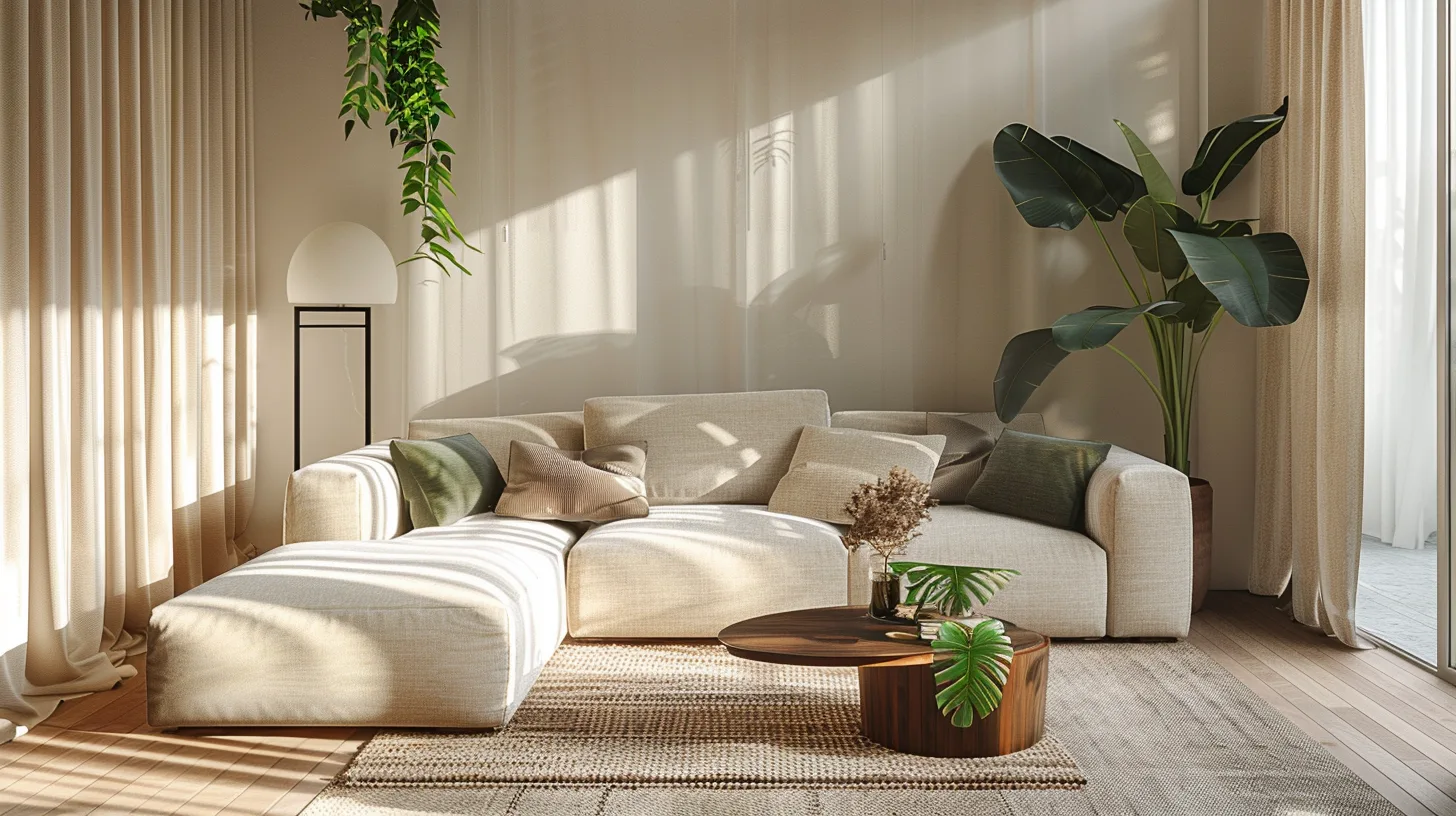
To achieve the perfect balance without guesswork, interior designers often recommend the 60-30-10 rule, specifically adapted for Japandi sensibilities. This formula helps ensure your colors are distributed harmoniously.
- 60% Base Neutrals: This is your canvas. Apply soft white, cream, oatmeal, or light beige to walls, ceilings, large area rugs, and the main sofa. This creates a cohesive, airy feeling that maximizes light.
- 30% Earth Tones & Wood: This is your character. Use warm wood tones (flooring, coffee tables, shelving), terracotta, stone gray, or leather in secondary furniture pieces (armchairs, side tables) and flooring. This layer adds texture and warmth.
- 10% Accents & Contrast: This is your spark. Use sage green, charcoal, indigo, or rust in small decor items, throw pillows, art frames, lamps, or plants. This layer adds depth, personality, and visual interest.
By following this ratio, you ensure your living room remains a harmonious, breathable space that feels curated rather than cluttered—a true reflection of the Japandi spirit.
Lighting: The Silent Color Changer
No discussion on color is complete without mentioning lighting. In a Japandi living room, natural light is the primary illuminator. It reveals the subtle undertones of your neutral paints and brings out the rich grain of your wood furniture. However, as the sun sets, your lighting choices will dramatically alter how your colors are perceived.
Avoid cool, blue-toned LEDs (4000K-5000K), which can make warm neutrals look sickly or gray and wood tones look flat. Instead, opt for warm white bulbs (2700K-3000K). This color temperature mimics the golden hour or candlelight, enhancing the warmth of beige, terracotta, and wood. It turns your living room into a cozy cocoon in the evening. Textured lampshades made of rice paper (like Noguchi lamps), linen, or rattan further diffuse the light, softening shadows and making your color palette glow warmly.
Texture as a Color Element
In the monochromatic or low-contrast world of Japandi, texture plays the role of a “color.” When you limit your palette to shades of beige and gray, you must vary the textures to prevent boredom. A smooth leather ottoman next to a nubby bouclé sofa creates visual interest, even if they are nearly the same color.
- Matte vs. Gloss: Japandi favors matte finishes (chalk paint, honed stone, unvarnished wood) which absorb light and feel softer.
- Rough vs. Smooth: Pair a rough jute rug with smooth polished concrete floors, or a raw wooden bowl on a sleek metal tray.
- Soft vs. Hard: Contrast fluffy wool throws with structured wooden chairs.
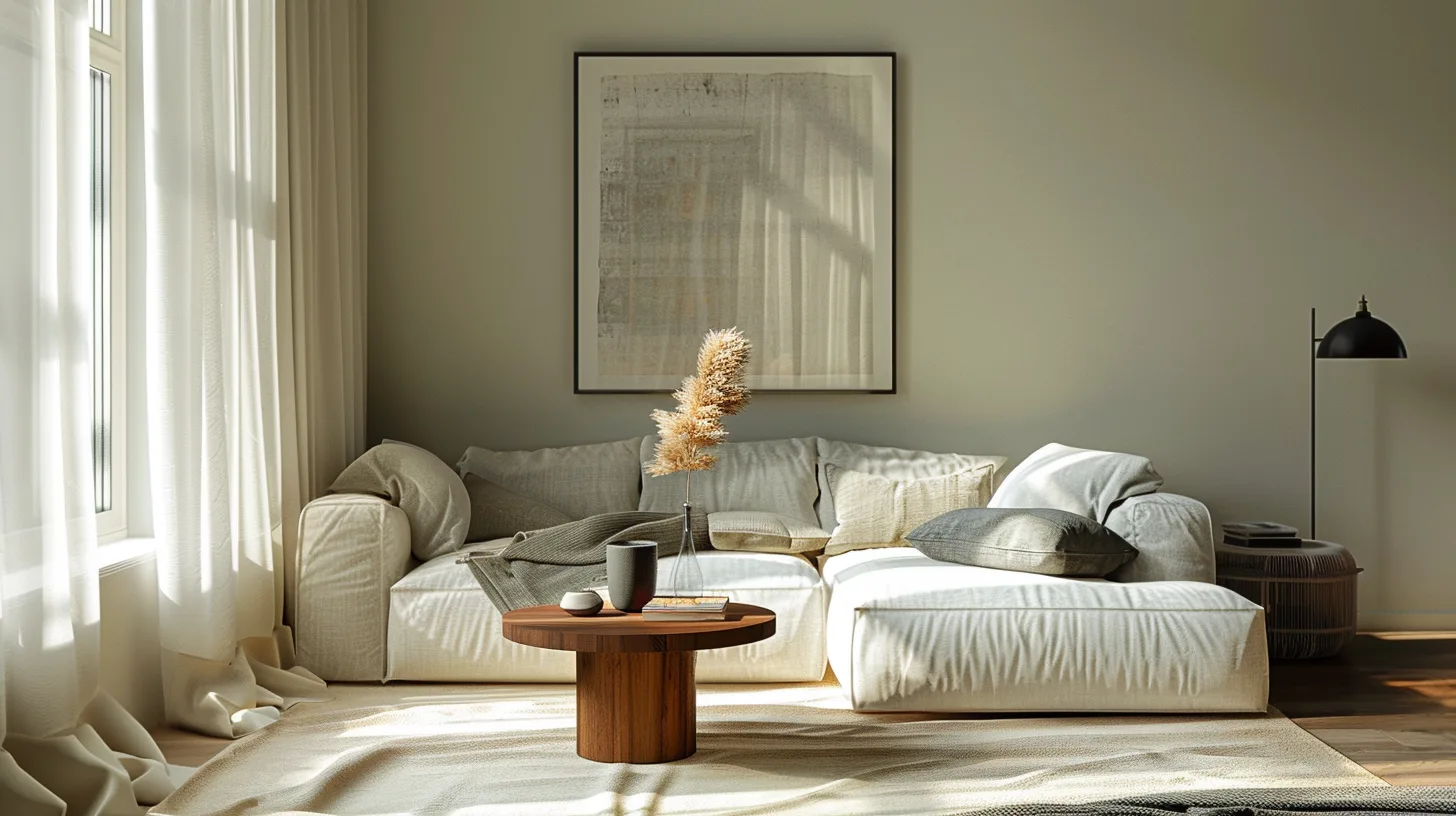
By treating texture with the same importance as hue, you add richness and complexity to your living room that flat color alone cannot achieve.
See also: serenehomespace-com-884286.hostingersite.com
Pinterest : serenehomespace
