
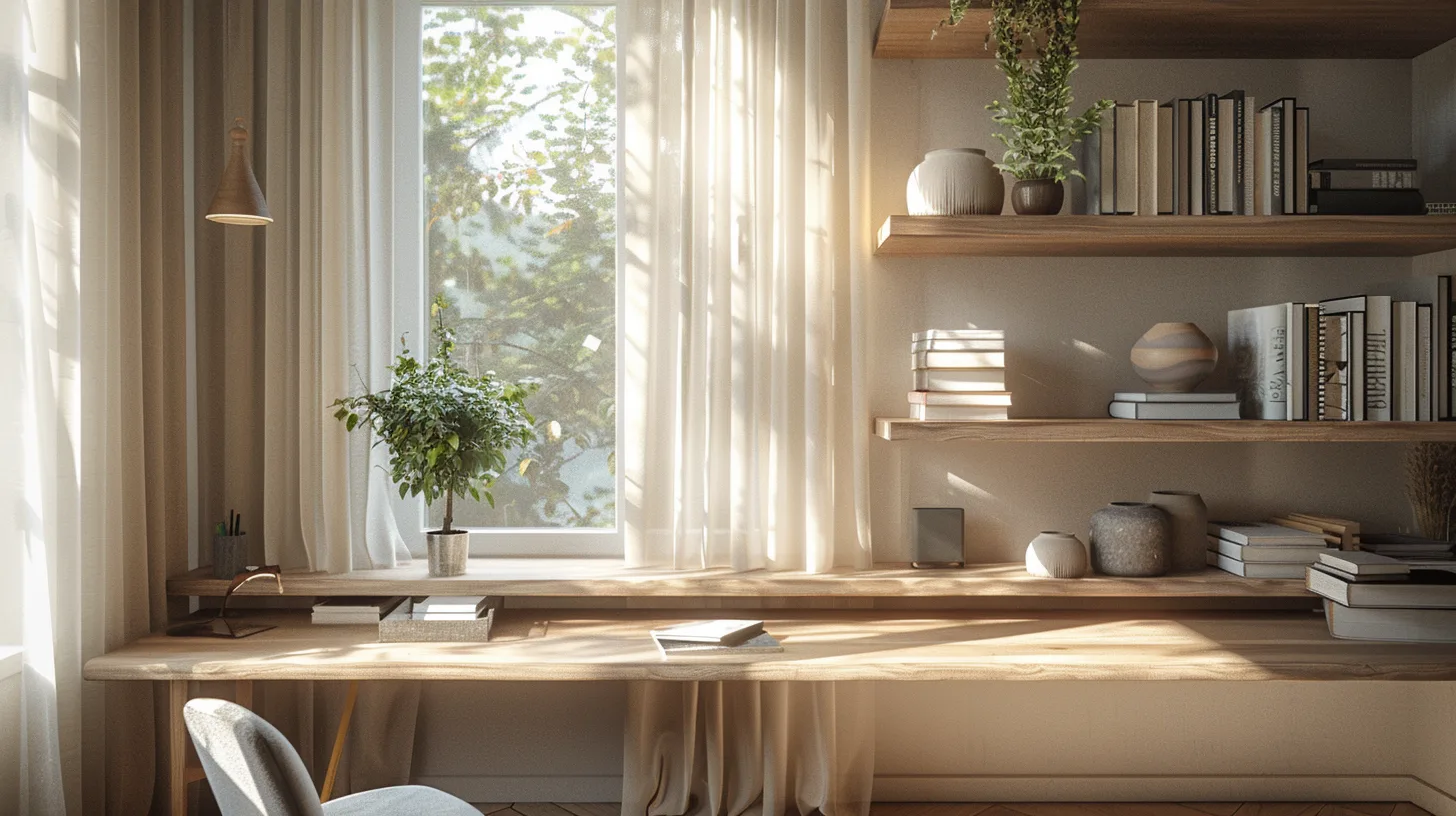
Creating a Japandi home office transforms daily work into a mindful practice, blending Japanese minimalism with Scandinavian warmth to craft a workspace that feels both focused and nurturing.
This design approach prioritizes calm functionality through natural textures, muted tones, and clean lines, proving that productivity and tranquility can coexist beautifully in a home environment.
Table of Contents
Table of Contents
Why Japandi Design Works Perfectly for Home Offices
The Japandi aesthetic strikes a delicate balance between the clean lines and simplicity of Japanese design and the warmth and comfort of Scandinavian hygge. This harmonious combination creates a space that feels both functional and inviting, making it ideal for remote work where mental clarity and emotional well-being directly impact productivity.
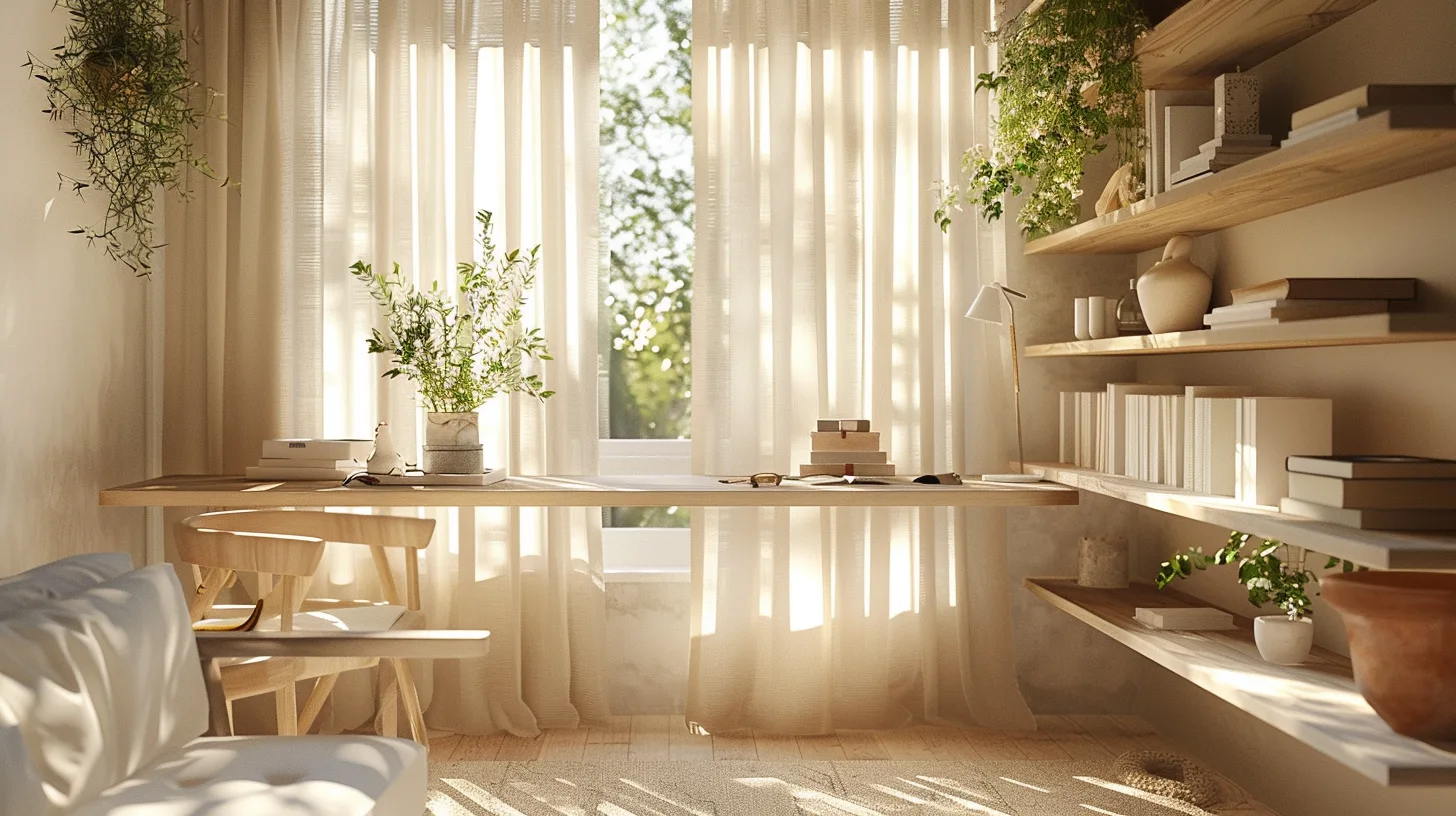
A clutter-free Japandi environment enhances concentration by removing visual distractions that fragment attention. The minimalist approach ensures every element serves a purpose, from ergonomic desk chairs to carefully placed task lighting. Vacant space is not wasted space but rather breathing room that allows the mind to settle and focus on the work at hand.
Natural materials like wood, stone, and linen create a connection with nature that promotes calm and reduces stress hormones. This biophilic design principle helps maintain energy levels throughout long workdays while fostering creativity and mental resilience.
See more: Top 5 Japandi Furniture Ideas for Small Spaces (Expert Guide)
Essential Elements of a Japandi Home Office
Warm Wood and Natural Materials
Natural materials form the foundation of any authentic Japandi home office. Light woods like white oak, ash, or birch bring Scandinavian warmth, while darker woods like walnut or teak add Japanese depth and grounding. A solid wood desk becomes the centerpiece, chosen for both its functionality and its ability to age beautifully over time.
Incorporate bamboo for desk organizers, cork for bulletin boards, and ceramic for pen holders to layer different natural textures. These organic materials feel pleasant to touch and create subtle visual interest without overwhelming the minimalist aesthetic. Stone accents like marble desk mats or granite bookends add weight and permanence to lightweight wood furniture.
Soft Neutral Color Palettes
The Japandi color palette centers on soft, muted tones that create a calming atmosphere conducive to focused work. Base colors include off-white, soft beige, warm gray, and earth tones that reflect natural light gently throughout the day. These neutral foundations prevent visual fatigue during long work sessions while maintaining a sense of spaciousness even in compact home offices.roomofinspo+5
Accent colors, when used sparingly, draw from nature—sage green, dusty blue, terracotta, or charcoal gray. A sage green accent chair or a terracotta planter brings personality without disrupting the serene environment. Avoid bright, saturated colors that energize to the point of distraction; Japandi prefers colors that ground and center.
Clean Lines and Minimalist Furniture
Japandi furniture is characterized by simple, clean lines and a minimalist aesthetic that prioritizes function over ornamentation. Opt for a sleek desk with ample but hidden storage, maintaining clean surfaces that support focused work. Floating desks mounted to walls maximize floor space while emphasizing horizontal lines that create visual calm.
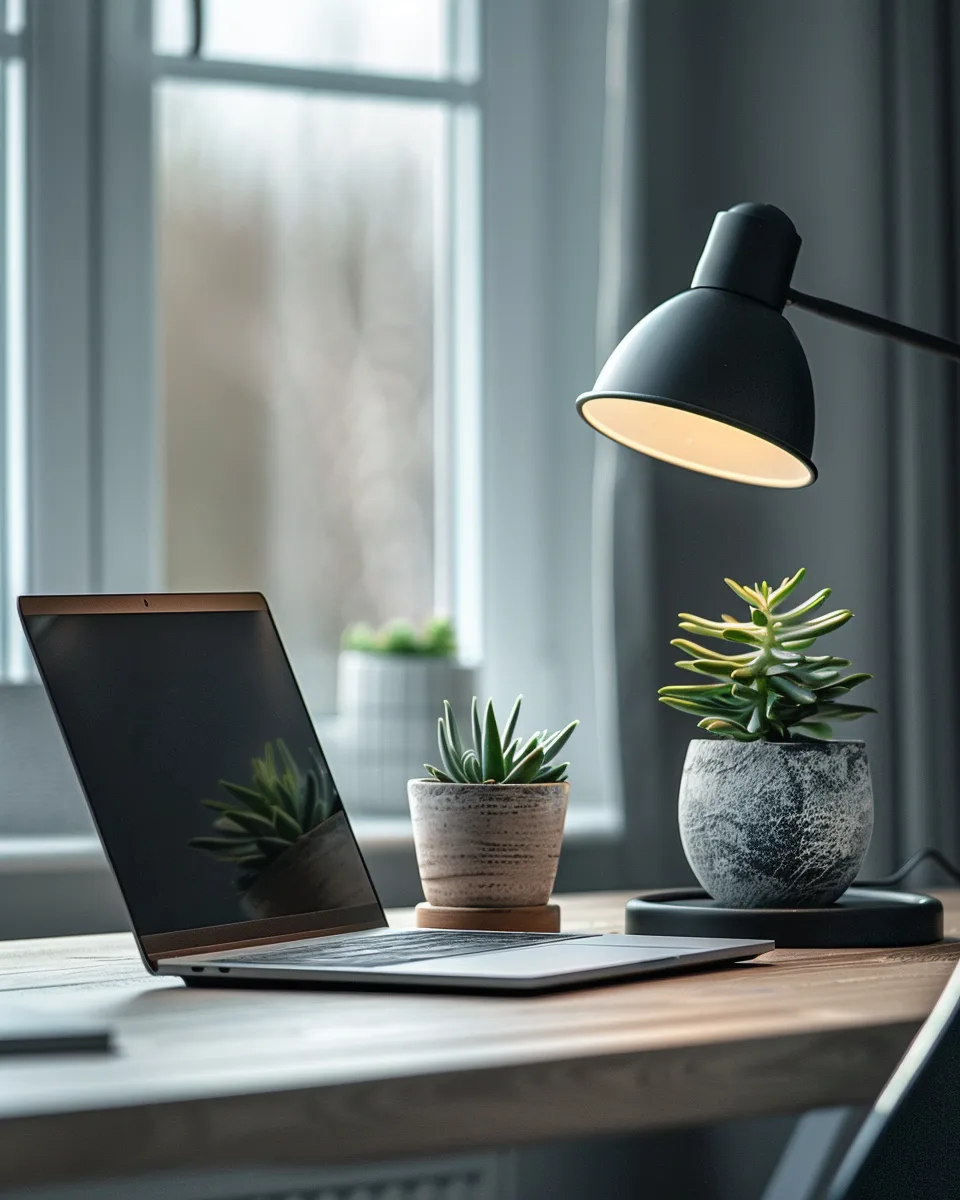
Office chairs should balance ergonomic comfort with streamlined design—avoid bulky executive chairs in favor of mid-century modern silhouettes with natural fiber upholstery. Storage solutions like floating shelves, built-in cabinets with flush doors, or simple wooden credenzas keep supplies organized without visual clutter.
Practical Japandi Home Office Layout Ideas
Maximizing Natural Light
Position your desk near windows to harness natural light, the most important element in any Japandi space. Natural light regulates circadian rhythms, improving sleep quality and daytime alertness—essential for remote workers. Install sheer linen curtains or adjustable blinds to control light intensity without blocking it completely.
If your office lacks abundant natural light, supplement with layered artificial lighting that mimics daylight patterns. Combine ambient ceiling lights with task lighting on your desk and accent lighting for shelving or artwork. Choose warm white bulbs (2700K-3000K) in natural material fixtures like rice paper pendants, wood table lamps, or ceramic sconces.
Floating Shelves and Smart Storage
Floating shelves epitomize Japandi design by providing functional storage while maintaining visual lightness. Install them in light wood finishes to display curated collections of books, small plants, or handmade ceramics. Arrange items with generous spacing between objects, allowing each piece to breathe and be appreciated individually.
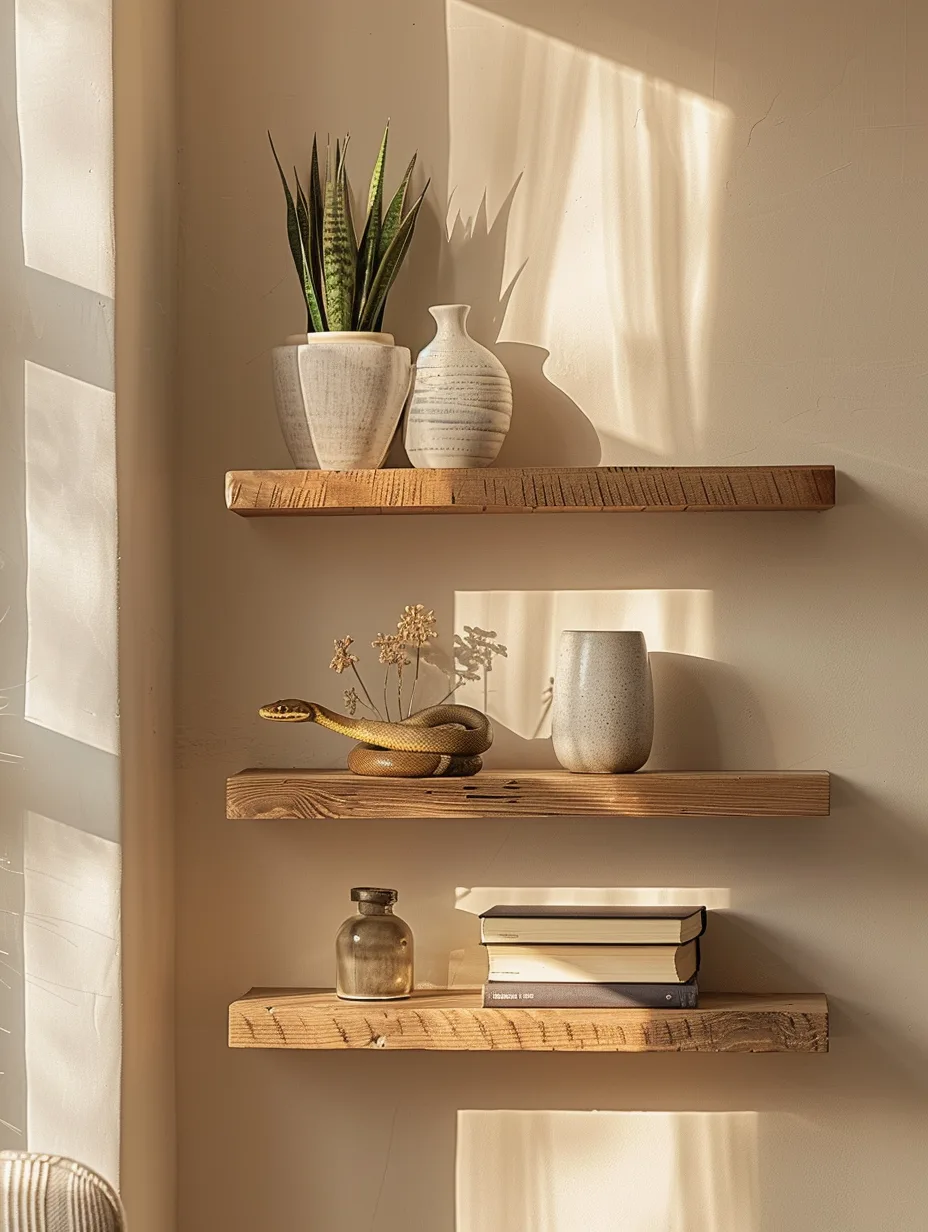
Hidden storage solutions maintain the clutter-free aesthetic essential to productivity. Choose desks with integrated drawers, wall-mounted cabinets with soft-close doors, or woven baskets that conceal office supplies while adding texture. The Japandi principle states that if an item doesn’t serve a function or bring joy, it shouldn’t occupy valuable workspace.
Creating Zones in Shared Offices
For households where two people work from home, Japandi design offers elegant solutions for shared workspaces. Install an extended floating desk along one wall to maximize surface area while minimizing visual clutter. Coordinate matching office chairs and desk accessories to maintain cohesion while adding individual task lighting or personal storage for each person.
Room dividers like shoji screens or tall plants create privacy without blocking light or closing off space. These flexible boundaries allow each person to focus independently while maintaining the open, airy quality characteristic of Japandi interiors.
Gentle Lighting for Focused Work
Lighting in a Japandi home office should be soft, layered, and adjustable to support different tasks throughout the day. Harsh overhead fluorescents disrupt the calm atmosphere and cause eye strain; replace them with diffused ambient lighting from rice paper pendants or fabric drum shades.
Task lighting becomes essential for reading documents or detailed computer work. Choose adjustable desk lamps in matte black metal or natural wood with linen shades that direct light precisely where needed. Position lamps to eliminate screen glare while illuminating keyboard and paperwork.
Accent lighting highlights architectural features or artwork, adding depth and visual interest without competing for attention. Small LED strips behind floating shelves create a gentle glow that makes the shelves appear to float, reinforcing the Japandi aesthetic of lightness.
Simple Wall Art and Decor
Wall art in a Japandi home office should enhance focus rather than distract from it. Choose minimalist compositions—abstract forms, nature photography, or simple line drawings in neutral tones. Frame artwork in light wood or matte black to complement the overall palette.
Japanese-inspired art like ink paintings, calligraphy, or prints of Mount Fuji connects the space to its cultural roots. Scandinavian art with geometric patterns, botanical illustrations, or coastal landscapes brings warmth without overwhelming simplicity. Limit wall art to one or two carefully chosen pieces that command attention through isolation rather than quantity.
Decor should remain intentional and sparse. A single ceramic vase with dried pampas grass, a handmade pottery bowl for paperclips, or a small bonsai tree provides personality without creating visual noise. Each decorative element should pass the “does it serve a function or bring genuine joy” test before earning its place in the workspace.
Bringing Nature into Your Workspace
Plants play a crucial role in Japandi home offices, improving air quality while creating visual connections to nature. Choose sculptural plants with clean silhouettes like snake plants, peace lilies, or rubber plants that complement minimalist aesthetics. Smaller succulents or pothos in simple ceramic planters add greenery to shelves or desk corners without overwhelming limited space.
Position larger floor plants like fiddle leaf figs or bamboo palms in corners to soften architectural angles and add vertical interest. The presence of living plants reduces stress, increases humidity for comfort during screen work, and provides gentle movement that breaks the stillness of static furniture.
Natural elements beyond plants—like driftwood sculptures, river rocks in shallow bowls, or pressed botanical prints—reinforce the connection to organic materials central to Japandi philosophy.makerstations+1
Maintaining a Clutter-Free Workspace
The Japandi home office thrives on daily maintenance rituals that preserve its calm functionality. End each workday with a five-minute reset: file papers, return pens to holders, and clear the desk surface completely. This practice creates psychological closure, signaling to your brain that work has ended and relaxation can begin.
Implement the “one in, one out” rule for office supplies and decor. Before adding a new item, remove something else to maintain equilibrium. Regular decluttering sessions—monthly or seasonally—ensure that accumulated items don’t gradually erode the minimalist aesthetic you’ve carefully cultivated.
Digital clutter affects focus as much as physical clutter. Organize computer files with the same Japandi principles: simple folder structures, descriptive names, and regular archiving of completed projects. A clean desktop—both physical and digital—supports mental clarity and efficient workflow.
Creating Your Personal Japandi Sanctuary
Designing a Japandi home office represents more than aesthetic preference; it becomes a daily practice in intentional living. This workspace supports not just productivity but also mental health, work-life balance, and creative fulfillment. By choosing quality materials, limiting distractions, and creating visual calm, you craft an environment where focus flows naturally rather than requiring constant effort.
The beauty of Japandi design lies in its flexibility and accessibility. Whether working with a dedicated room or a corner nook, the principles of warm wood, soft neutrals, clean lines, and gentle lighting adapt to any space and budget. Start with one element—perhaps a wooden desk or floating shelves—and build gradually, allowing your workspace to evolve organically as you discover what truly supports your best work.
🕊️ Together, we create calm — so you can live beautifully.
Email: contact@serenehomespace-com-884286.hostingersite.com
Facebook: facebook.com
Pinterest: https://www.pinterest.com/serenehomespace
instagram: https://www.instagram.com/serenehomespace
