
A Japandi long dresser is one of the most quietly powerful pieces you can bring into a bedroom or living space — low, wide, and utterly intentional. Blending the clean craftsmanship of Scandinavian furniture with the grounded simplicity of Japanese design, the Japandi long dresser offers generous storage without ever raising its voice. It asks for nothing more than an empty wall, a little natural light, and a few carefully chosen objects placed on top.
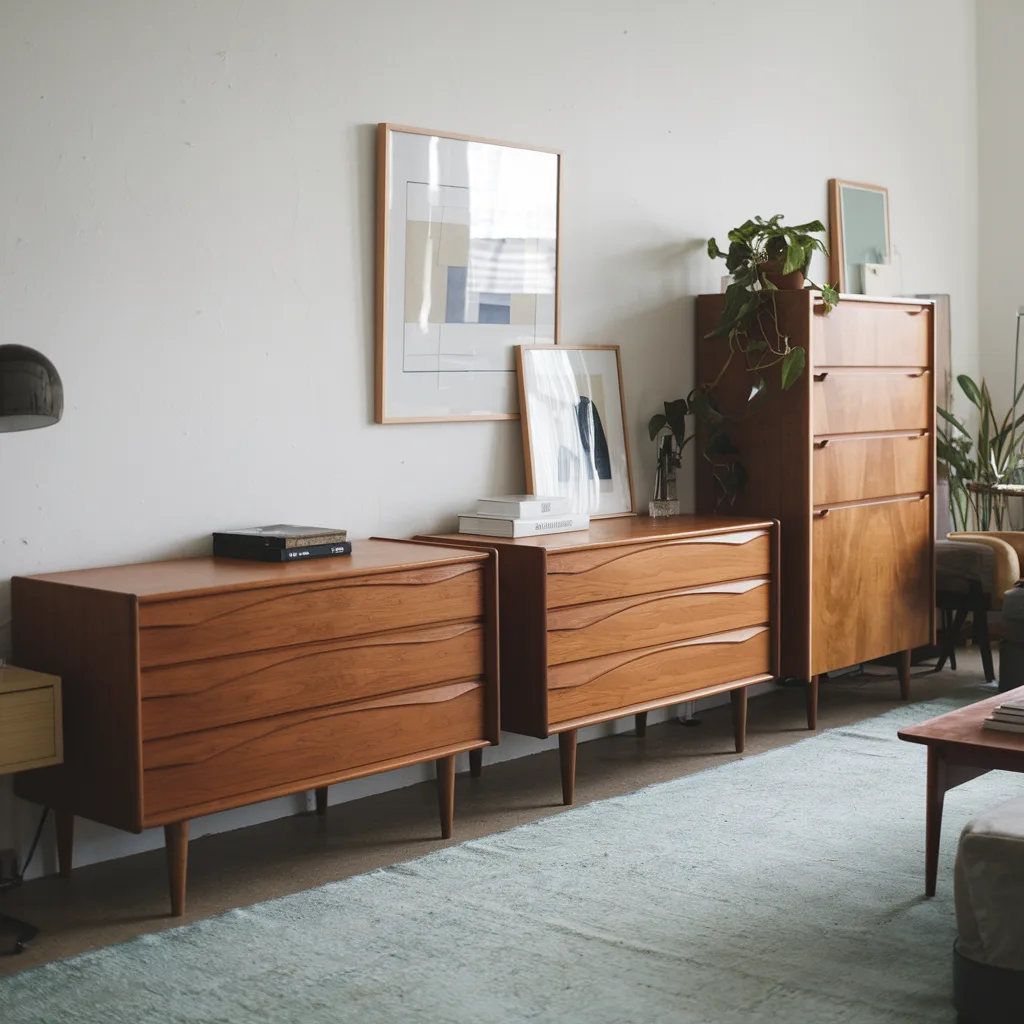
Table of Contents
What Makes a Dresser Truly Japandi
Not every wooden dresser earns the Japandi label. The defining qualities are restraint, materiality, and proportion. A true Japandi long dresser sits low to the ground on tapered legs, features flush or subtly recessed drawer fronts with minimal hardware, and is crafted from natural wood — light oak, ash, walnut, or birch — left to breathe in its near-natural state.
The grain of the wood is the decoration. There are no ornate handles, no carved details, no glossy lacquer fighting for attention. What you see is honest material, honest construction, and a silhouette that feels rooted in both wabi-sabi — the Japanese beauty of imperfection — and the Nordic love of functional warmth. The result is a piece that looks more beautiful as it ages, collecting small marks and a gentle patina that only deepens its character.
The Four Expressions of Japandi Long Dressers
Looking at these four pieces, you can see how Japandi dressers express a wide range of moods while staying faithful to the same core philosophy.
The Light Oak Classic
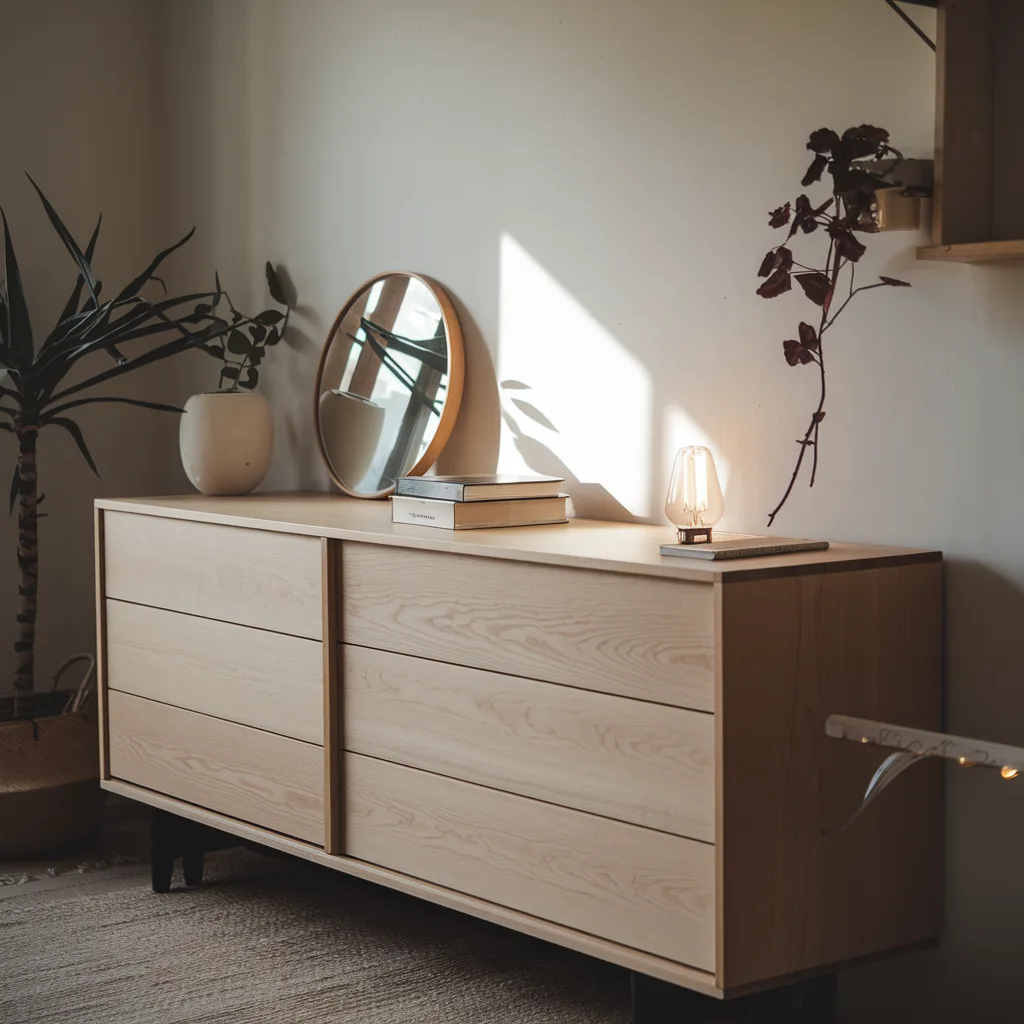
The first dresser — pale oak, six drawers, simple tapered legs — represents Japandi at its most serene and accessible. The light wood tone reflects daylight gently, making even a small bedroom feel airy and expanded. Styled with a round wood-framed mirror, a small sculptural vase, a glowing Edison lamp, and a single branch of dark foliage, this dresser demonstrates the Japandi principle of curated contrast: soft wood against a dark plant, warm light against a cool white wall.
This lighter expression suits bedrooms with abundant natural light, neutral walls, and soft linen textiles. It pairs naturally with sage green cushions, jute rugs, and cream bedding to create an atmosphere that feels like a slow, quiet morning.
The Warm Walnut Collection
The second image showcases something rarer — a full collection of matching warm walnut dressers in varying heights and configurations, from a low bedside chest to a tall narrow cabinet. This rich, amber-toned wood embodies the Japanese side of Japandi deeply: grounded, dignified, and tactile. The flowing, wave-like drawer pulls are a masterpiece of restrained ornamentation, adding just enough organic movement to prevent the pieces from feeling rigid.mojoboutique
Displayed together against soft white walls with abstract framed prints, trailing pothos plants, and stacked books, this collection shows how Japandi dressers can anchor an entire room’s visual identity. The warm tones create intimacy, the clean lines maintain order, and the varying heights add rhythm without chaos.obcd+1
The Two-Tone Statement Piece
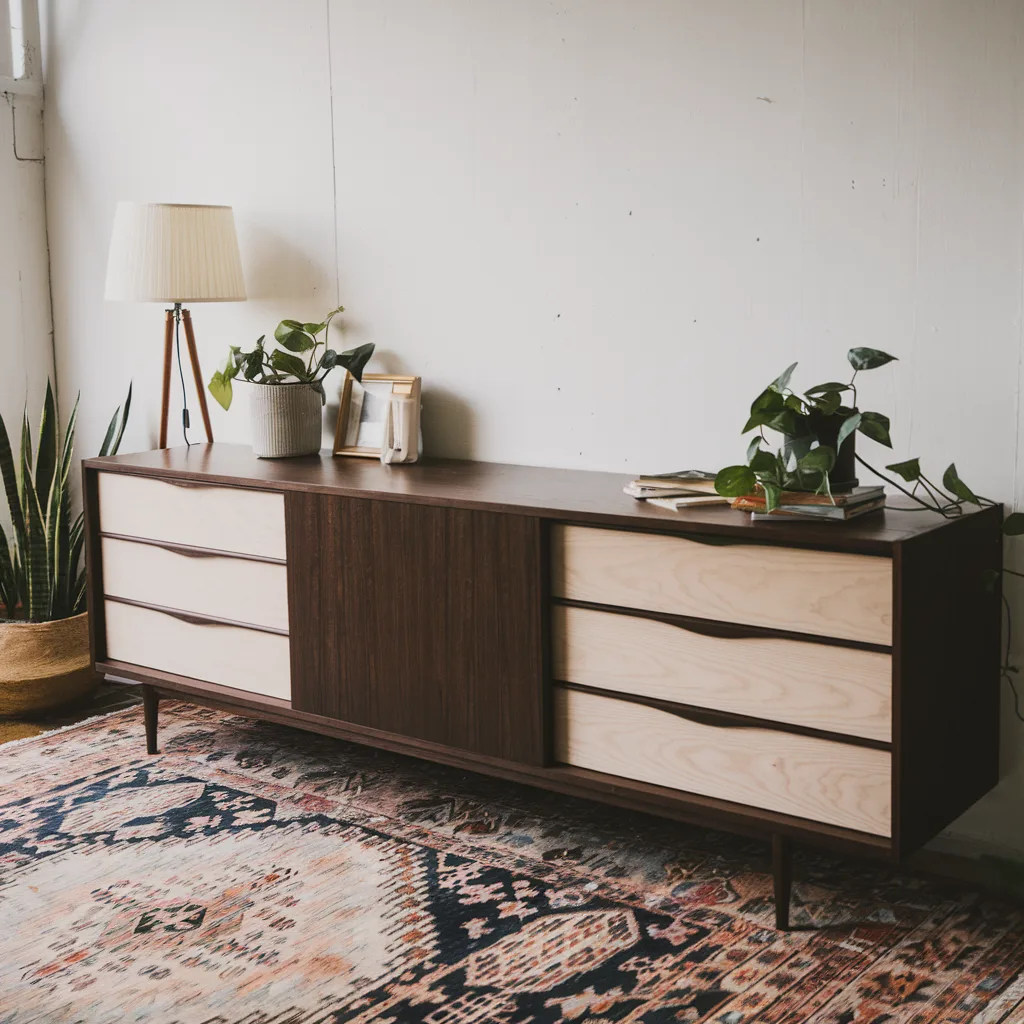
The third dresser makes the boldest statement through its two-tone construction — dark walnut frame paired with lighter, contrasting drawer fronts that create a graphic, architectural quality. This piece leans into the Japanese concept of ma (negative space) and deliberate visual tension. The dark frame “holds” the lighter drawers like a picture frame holds art, giving the whole piece a composed, gallery-like presence.japandistore
Styled on a richly patterned Persian rug with trailing pothos, a cream linen tripod lamp, and a small framed photograph, this dresser shows how Japandi can absorb and harmonize with more eclectic, layered surroundings without losing its essential calm. It is the ideal choice for someone who wants a strong design statement delivered in the quietest possible voice.
The Minimalist Wide Dresser
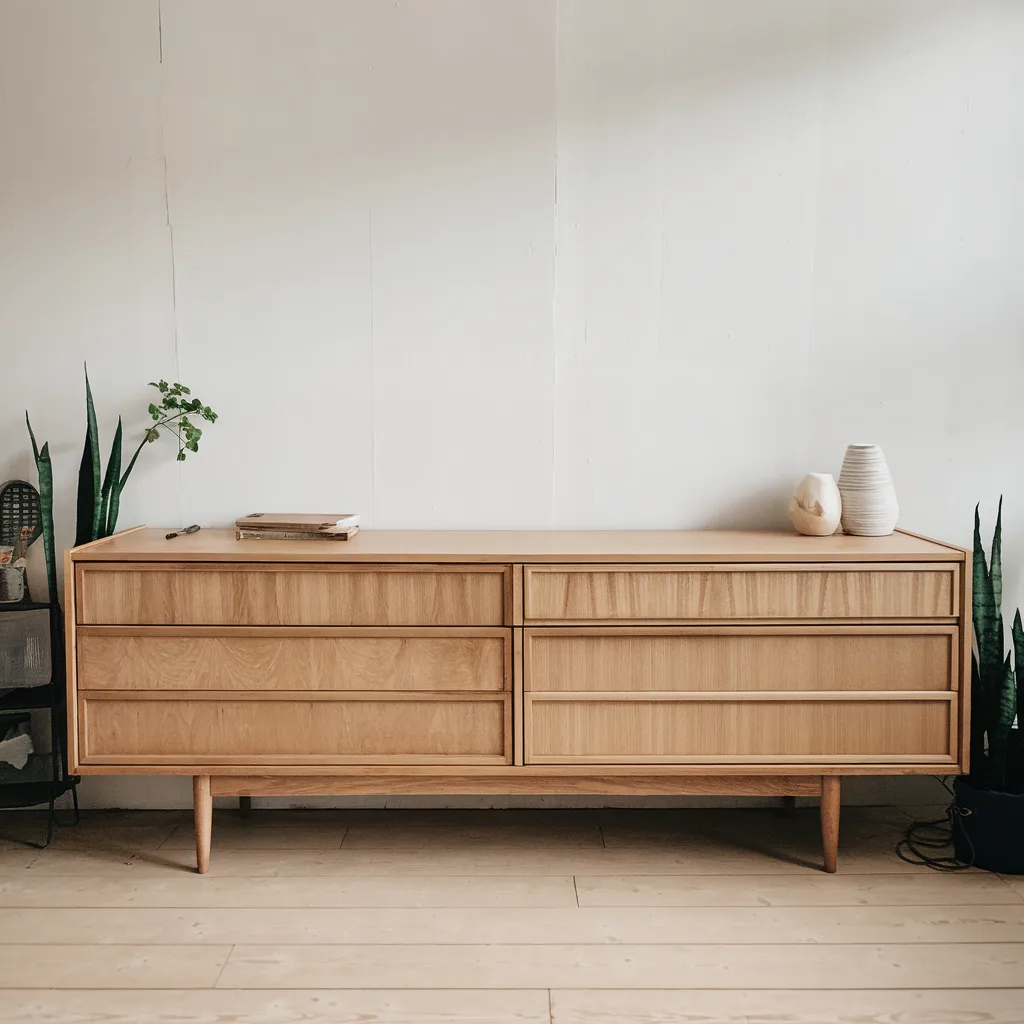
The fourth dresser is perhaps the most purely minimal of the four — a wide, clean-lined oak piece with flush drawers, no visible hardware, and an almost architectural simplicity. Placed on pale wood floors flanked by tall snake plants in simple baskets, with two small ceramic objects and a notebook on top, this dresser captures the essence of Japandi restraint perfectly: nothing is missing, nothing is excess.obcd+2
This wide format suits bedrooms where the dresser becomes a functional feature wall. The horizontal emphasis draws the eye across the room and makes ceilings feel taller, a welcome effect in compact spaces.
How to Style the Top of Your Japandi Long Dresser
The surface of a Japandi long dresser is a carefully edited stage, not a storage shelf. The goal is to place three to five objects that together create a moment of quiet beauty while remaining effortlessly tidy.
Start with a tray. A bamboo, ceramic, or lacquered tray anchors the composition and contains smaller items like a watch, a candle, or a ring dish. It signals organization without rigidity. Add height with a plant. A single stem in a ceramic vase, a small pothos trailing softly, or a sculptural snake plant introduces organic life and vertical contrast to the horizontal dresser line. Include one reflective element. A round mirror, a small lamp with a warm-toned bulb, or a simple glass object catches light and adds depth to the composition. Finish with one personal touch. A favorite book, a handmade ceramic bowl, or a small framed print that holds meaning to you. This is the element that transforms a styled surface into a lived-in sanctuary.
Choosing the Right Wood Tone
Wood tone is the single most important decision when selecting a Japandi long dresser, as it sets the emotional temperature of the entire room.
Light oak and ash create an airy, Scandi-forward feeling — bright, clean, and serene. They are best paired with soft neutrals, linen textiles, and muted sage or dusty pink accents. Warm walnut and teak lean toward the Japanese side of the aesthetic — grounded, rich, and intimate. They suit warmer neutral palettes: cream, terracotta, deep sage, and charcoal. Two-tone combinations (dark frame, light drawers) offer the most visual drama while retaining Japandi’s essential restraint, best suited for rooms with confident, eclectic styling.
Regardless of the tone chosen, the finish should be matte or satin — never high gloss — to keep the surface feeling natural and tactile rather than reflective and hard.
Placement and Room Integration
A Japandi long dresser belongs against the longest wall of the room, where its horizontal line can stretch comfortably without feeling cramped. Leave breathing room on either side — at least 30-40 cm — and resist the urge to fill the wall above it entirely. One carefully chosen piece of art, a simple round mirror, or an empty wall with a single sconce is enough.
In bedrooms, position the dresser opposite or beside the bed, never blocking windows or natural light pathways. In living rooms or hallways, a Japandi long dresser serves as a sideboard, console, or media unit, grounding the space with warmth and function simultaneously.
Caring for Your Japandi Dresser
Natural wood furniture rewards simple, mindful care. Wipe surfaces with a slightly damp cloth and dry immediately to prevent water marks. Apply natural beeswax or wood oil once or twice a year to nourish the grain and deepen the tone over time.
Avoid placing hot items, wet glasses, or harsh cleaning products directly on the surface. Small scratches and marks that accumulate through daily life are not flaws — they are the wabi-sabi story of a piece well-loved.
Internal Links:
