
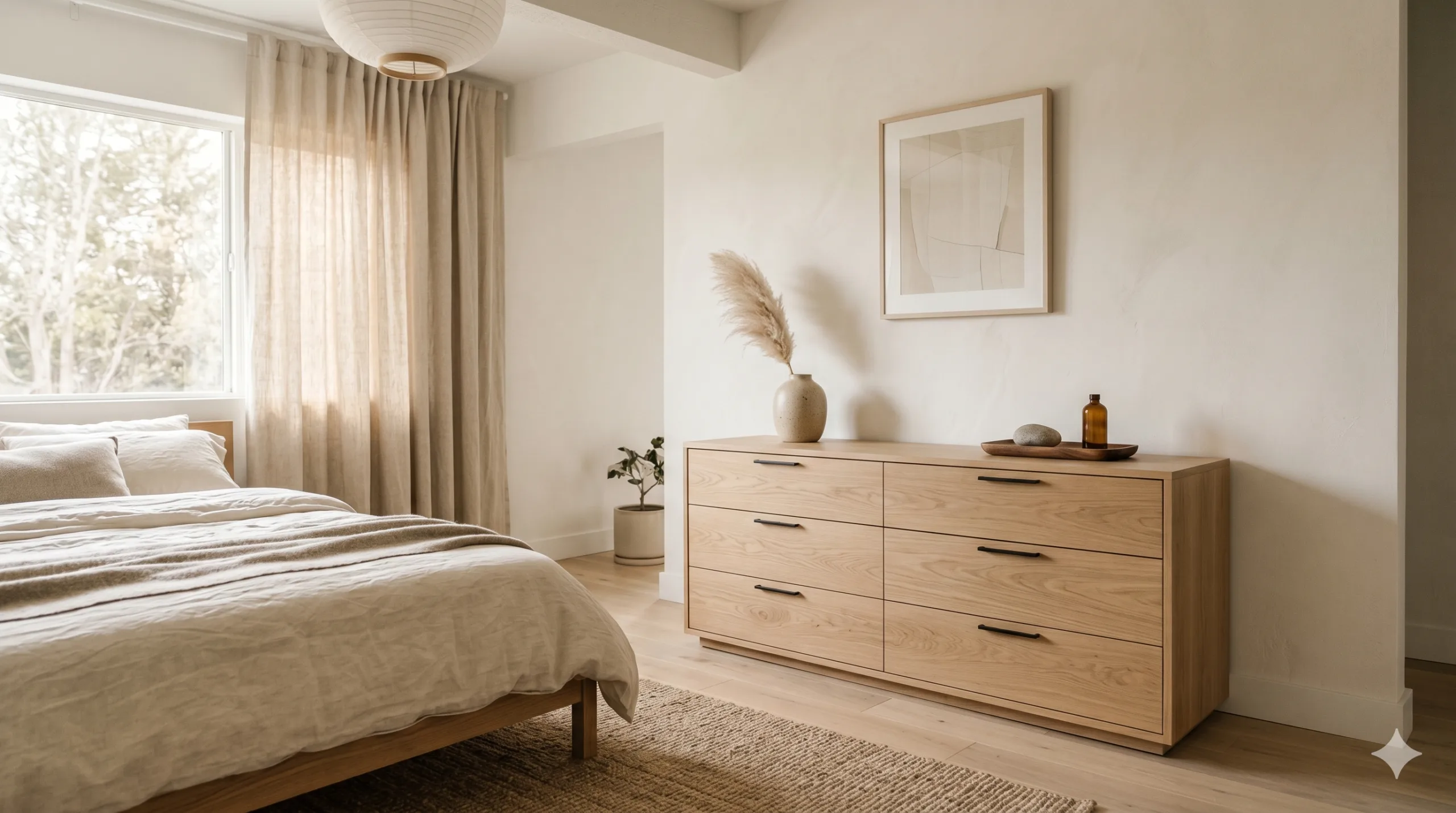
There is something quietly transformative about a well-chosen dresser. In a small bedroom, it holds more than clothes — it holds the mood of the entire room. And when it is designed in the Japandi way, it becomes a piece you pause in front of each morning, not to check a to-do list, but simply to breathe.
This guide covers everything you need to choose, style, and afford the perfect Japandi dresser for a small bedroom — from wood tones and color palettes to budget finds that feel genuinely luxurious.
By Mery Lavigne
Table of content
Table of Contents
What Makes a Dresser Truly Japandi?
Japandi is the quiet conversation between Japanese minimalism and Scandinavian warmth. A truly Japandi dresser does not shout. It simply exists, beautifully and purposefully, without unnecessary decoration.
Look for these qualities: clean horizontal lines, a low or medium profile, natural wood with a matte finish, simple hardware (or no hardware at all), and a silhouette that leaves visual space around it. Avoid glossy finishes, ornate carved details, or high-gloss lacquer. The spirit of Japandi lives in organic texture, honest materials, and quiet restraint.
The 7 Best Japandi Dresser Styles for Every Bedroom Size
Not all Japandi dressers are the same. Here are the seven styles that work best in a small bedroom, from the most spacious to the most compact:
1. The low-profile long dresser — sits close to the ground, widens the room visually, and works beautifully as a TV stand or display surface. Ideal for rooms with low ceilings.povison
2. The 6-drawer classic — the most versatile. Three drawers on each side, in white oak or ash, with slim metal or wooden handles. A timeless choice for any small bedroom.mojoboutique
3. The floating dresser — mounted on the wall, it frees up floor space and creates an airy, elevated feel. Perfect for rooms under 12 m².
4. The chest of drawers (tall, narrow) — ideal when floor space is limited but vertical space is available. Choose one in warm birch or light ash.genroom
5. The 3-drawer accent dresser — a smaller, lighter piece that functions beautifully as a bedside dresser or corner accent in a studio bedroom.
6. The credenza-style dresser — wide, low, with sliding doors rather than drawers. A beautiful Japandi signature that brings a Japanese tansu spirit into the space.
7. The natural rattan-front dresser — combines warmth and texture in one piece. Pairs beautifully with linen bedding and a single ceramic vase.
Japandi Dresser Colors: Warm Neutrals, Wood Tones & Soft Greens
Color in a Japandi dresser is never an accent — it is a foundation. The palette is built on three layers:genroom
Light woods — white oak, ash, and birch bring Scandinavian warmth and a gentle honey tone. These are the most versatile and the easiest to integrate into any bedroom palette.global.fujioh+1
Dark woods — walnut and teak add Japanese depth and grounding. A walnut dresser in a pale bedroom creates the kind of quiet contrast that feels intentional and calm.
Matte painted finishes — soft warm white, warm greige (gray-beige), clay rose, and sage green are the perfect choices if you prefer a painted dresser. Always choose matte over satin, and warm undertones over cool ones.
The most beautiful Japandi dressers pair a light wood base with darker hardware — or a painted frame in warm white with an oak drawer front. The contrast principle is simple: one light, one dark, always harmonious.global.
How to Style a Japandi Dresser (Top, Sides & Wall Above)
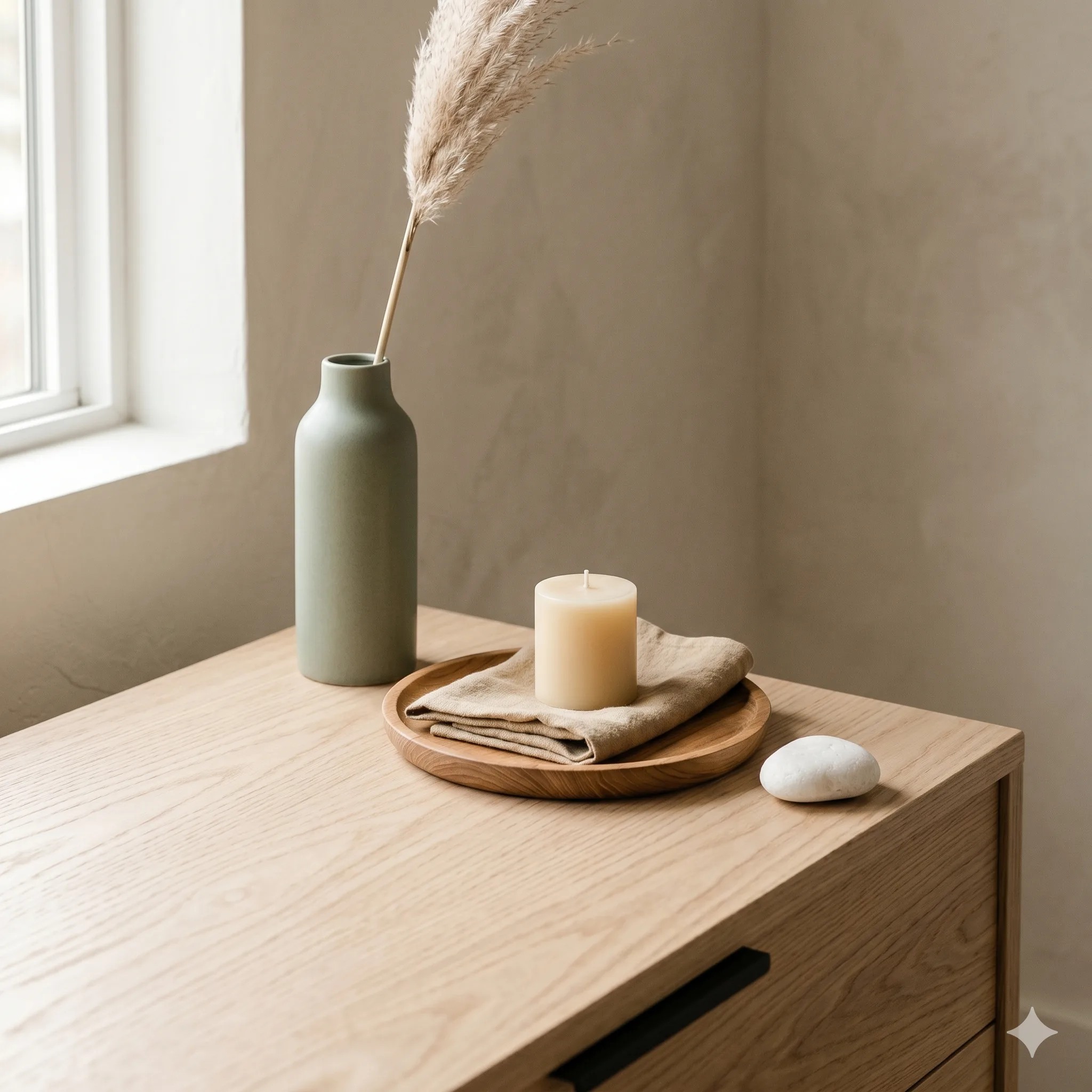
The top of your dresser is a small altar to calm. Less is always more, but thoughtless emptiness feels cold. Here is the SereneHomeSpace formula for styling a Japandi dresser:
Rule of three: Choose one tall element (a dried pampas grass stem or a single branch in a ceramic vase), one medium element (a small tray in natural wood or stone holding your essentials), and one low element (a smooth pebble, a folded linen cloth, or a soft candle).mojoboutique
The wall above: Leave it breathing. A single artwork in muted earth tones, a small round mirror in wood or rattan, or simply nothing at all — all are beautiful choices. Avoid gallery walls above a Japandi dresser; they create visual noise that works against the calm you are trying to build.
The sides: Leave a minimum of 40 cm of empty space on each side if possible. The dresser should feel like it has room to breathe within the room.
Japandi Dresser on a Budget: Affordable Finds That Look Expensive
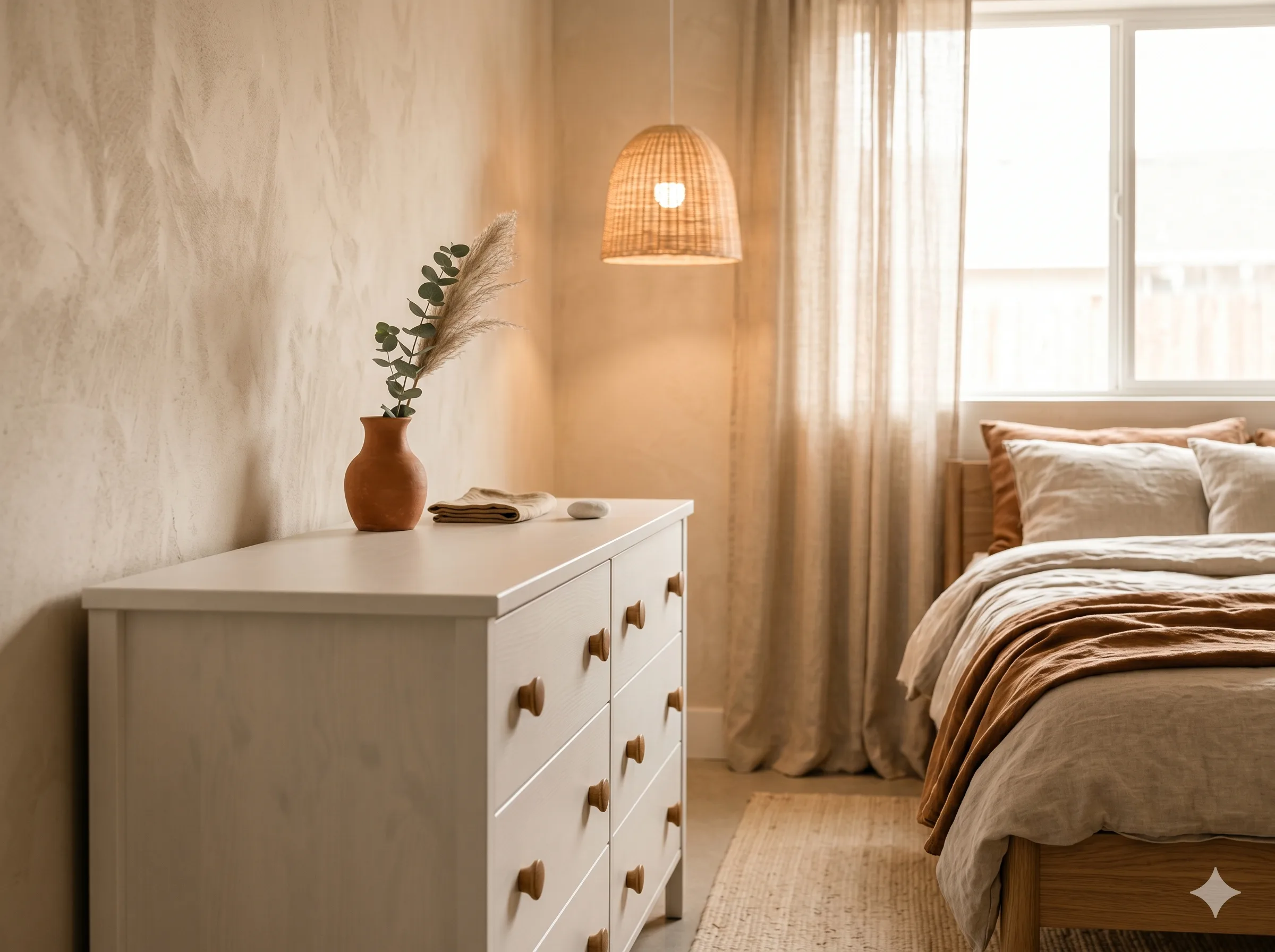
One of the most liberating truths about Japandi design is that it was never about spending more — it was always about choosing better. Here are five budget strategies that genuinely work:
Shop IKEA with intention. The HEMNES dresser in white stain or light brown is one of the most Japandi-friendly pieces available under $300. Add minimal round wooden knobs from Etsy to elevate it instantly.
Thrift and transform. A simple second-hand dresser in good condition, repainted in warm white or greige with matte paint and new hardware, can look like a $900 piece for under $80.youtube
Choose fewer drawers. A 3-drawer dresser is more affordable and often more elegant in a small room than a bulkier 6-drawer version. Pair with a small woven basket on top for extra storage.mojoboutique
Prioritize the top surface. Even a very simple dresser looks Japandi when styled with care. Invest in one beautiful ceramic piece for the top — a small vase, a sage green bowl — and let it do the work.povison+1
Look at Wayfair, Castlery, and Amazon Basics. Solid wood dressers in light oak or ash finishes under $400 exist, and they hold the Japandi aesthetic with dignity.
Best Wood Types for a Durable Japandi Dresser
Not all wood is equal in terms of longevity. Here is a simple guide to choosing well:genroom+1
White oak is the gold standard for Japandi. It is dense, durable, and develops a warm patina over time. It pairs with almost every palette and holds matte finishes beautifully.
Ash is lighter than oak with a slightly more visible grain. It is excellent for smaller pieces and adds a gentle Scandinavian softness.
Birch is pale and golden, often used in plywood forms. Affordable, durable, and very close in feel to solid oak at a lower price point.
Walnut is the statement choice. Rich, deep, and deeply Japanese in spirit. Use one walnut dresser as a grounding anchor in an otherwise light bedroom.global.fujioh+1
Always prioritize matte or satin finish over gloss, and solid wood or quality veneer over MDF when buying for durability.
Small Bedroom? Here’s How to Choose the Right Dresser Size
In a small bedroom, a dresser that is too large becomes a wall. Here are three practical rules to size correctly:
The 1/3 rule: Your dresser should never occupy more than one third of any single wall. If your bedroom wall is 3 meters wide, keep the dresser under 1 meter wide.
Height matters: In rooms with low ceilings, a low horizontal dresser will make the space feel larger and more breathed. In rooms with higher ceilings, a tall narrow chest of drawers works better and maximizes vertical storage.
Leave floor breathing space: The more floor you can see around and under the dresser, the larger and calmer the room will feel. If possible, choose a piece with legs — even 10 cm of clearance under the dresser transforms a small room.
A final gentle reminder: in a Japandi bedroom, the dresser does not need to match every other piece of furniture exactly. It simply needs to speak the same quiet language — natural, warm, honest, and still.global.
FAQs: Japandi Dresser Styling, Care & Budget
What is the most Japandi-friendly dresser color?
Warm white, light oak, soft greige, and warm walnut are the four most authentically Japandi tones. Avoid cool grays and high-gloss white.
Can I make an IKEA dresser look Japandi?
Absolutely. The HEMNES or HAUGA range with minimal round oak or black metal knobs, styled with a single ceramic vase and a linen tray on top, reads as genuinely Japandi.
How do I care for a natural wood Japandi dresser?
Dust weekly with a soft cloth. Treat the wood every 6 months with a light natural oil (beeswax or linseed). Avoid direct sunlight and damp cloths.
Is a floating dresser better for a small bedroom?
Yes, if your walls allow it. A floating dresser at 40–50 cm height opens the floor and creates an airy, elevated feel that makes small bedrooms feel significantly larger.
What should I put on top of a Japandi dresser?
One ceramic vase (with a single dried stem or nothing), one small wooden tray, and one low object like a candle or smooth stone. Never more than three items.
Curate peace, not perfection. Let your dresser hold the calm your bedroom deserves.
Others articles:
→ Japandi Furniture on a Budget: 15 Genius Ideas Under $200
→ Best colors for a japandi living room
