
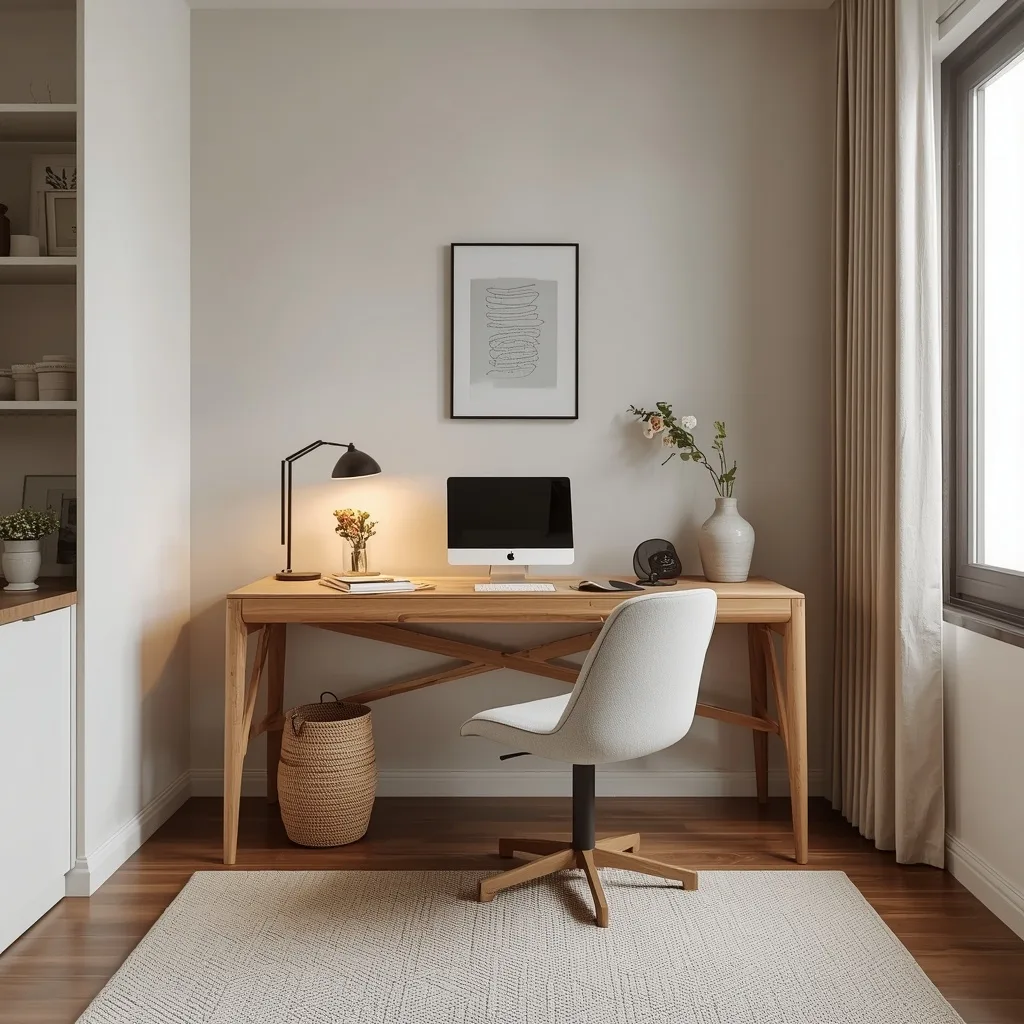
Clear your home, clear your head. Less clutter. More meaning.
By Jonas Elwood
The best japandi home office ideas begin with one simple question: what does your workspace need to feel like, not just look like? A Japandi home office is not a showroom. It is a space designed to hold your focus, protect your calm, and support your best thinking — whether you work from a full room or a quiet corner of your apartment. This guide gives you everything you need to design it well.
Table of Contents
Table of Contents
What Is a Japandi Home Office?
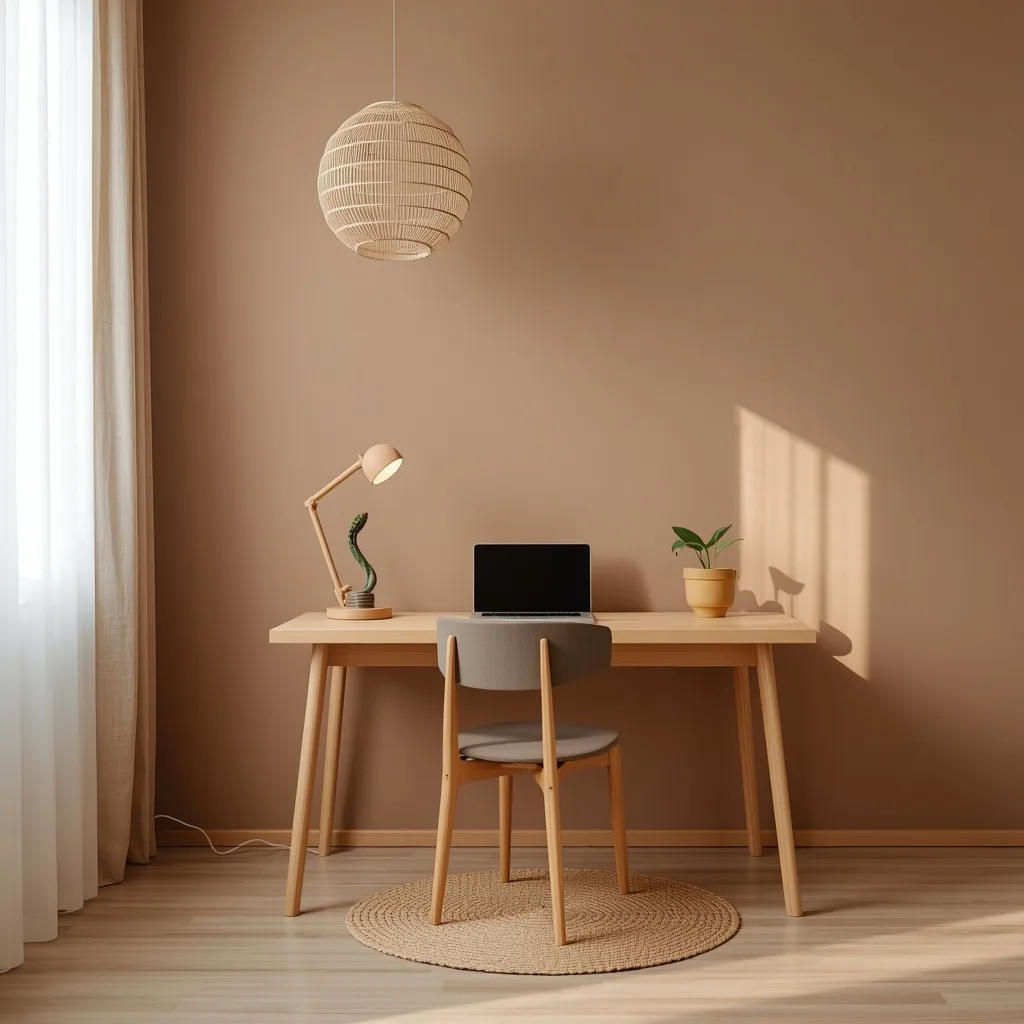
A japandi home office blends the Japanese principle of ma — intentional empty space — with the Scandinavian value of funktionalitet, which means that every object must earn its place through usefulness. The result is a workspace that feels simultaneously calm and efficient, warm and uncluttered.
Unlike a standard minimalist office, a Japandi workspace does not feel cold or clinical. Natural wood, soft textures, warm light, and one or two living elements give it a human quality that makes long work days feel easier and more grounded.
The 5 Principles of a Japandi Workspace
The best japandi home office ideas all share the same five foundations:youtube
Natural materials first — your desk, shelving, and accessories should be in wood, linen, ceramic, bamboo, or stone. Avoid plastic, chrome, and glossy surfaces which break the calm immediately.
Clutter-free surfaces — keep at least 40% of your desk surface empty at all times. Only essential objects stay visible.
Warm neutral palette — warm beige, light oak, muted gray, soft off-white, and earthy brown. No bright colors, no high-contrast accents except one deliberate dark element.
Soft layered lighting — natural light as the primary source, warm artificial light at 2700K as the secondary. Never harsh overhead fluorescent.
One living element — one plant, one ceramic piece, one meaningful object. Never more. The goal is a desk that breathes.
Best Japandi Desk Setups for Small Home Offices
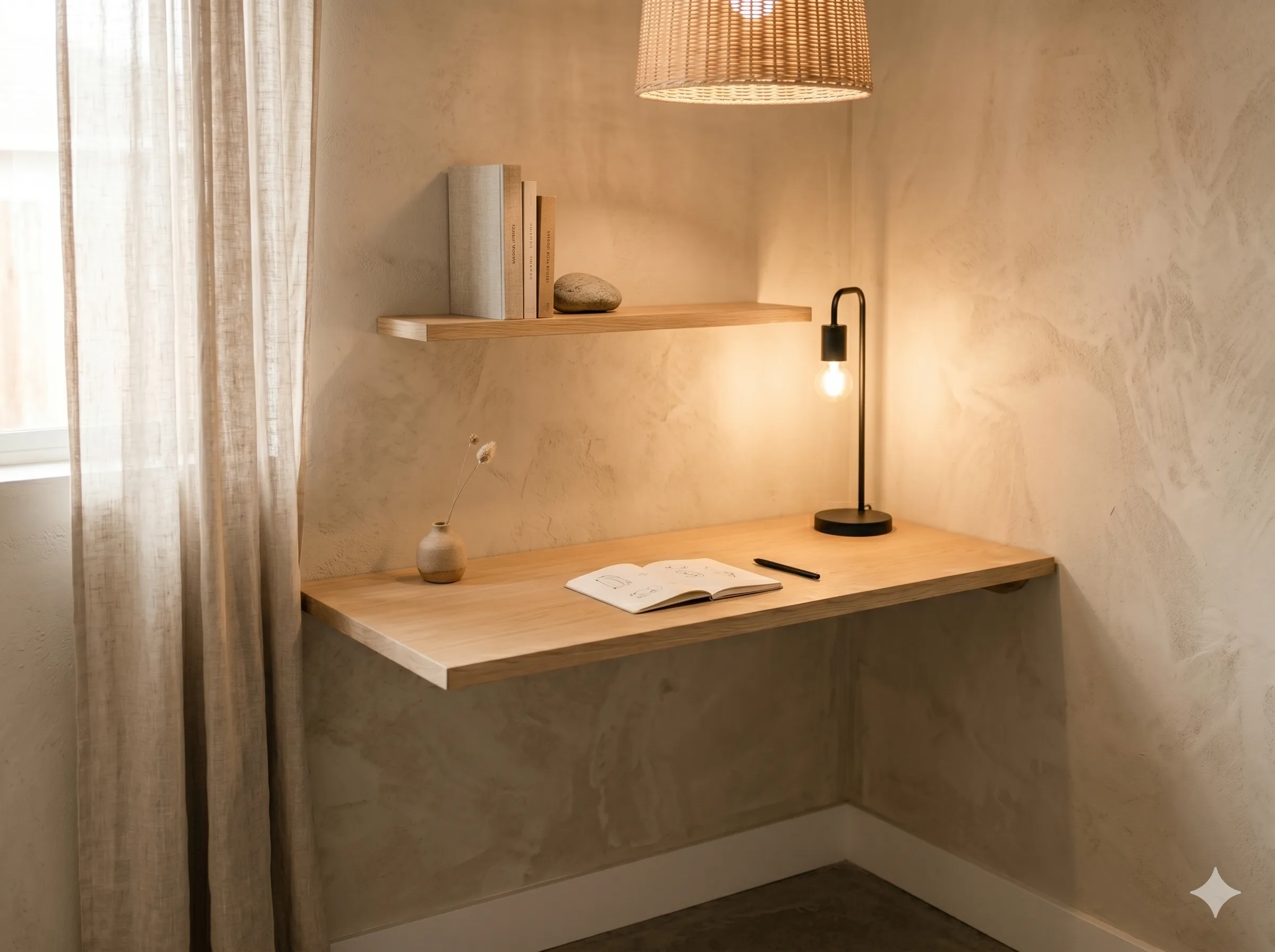
The desk is the soul of any japandi home office ideas list. Choose a clean-lined desk in solid natural wood — light birch or ash for a Scandinavian feel, walnut or teak for a Japanese depth.
The surface should be large enough for your essentials without feeling crowded. Ergonomically, the desk height should allow your elbows to rest at a 90-degree angle when typing. A slim silhouette with no visible hardware keeps the design intentional and calm.
For small spaces, a wall-mounted floating desk in light oak at 75–80 cm height is one of the most space-efficient and visually serene choices. It frees the floor, creates visual breathing room, and can be folded away when not in use.
Japandi Office Colors: Neutrals, Wood & Sage Green
The 60-30-10 color rule works beautifully in a Japandi home office: 60% of the room in your dominant neutral (warm white or warm greige walls and floor), 30% in your wood tone (desk, shelves, accessories), and 10% in one quiet accent color — sage green, clay, or muted charcoal.
Avoid cool grays, bright whites, and any glossy finish. The warmth of the palette is what separates a Japandi workspace from a cold modern office. A warm greige wall beside a light ash desk with one sage green plant is a composition that works every single time.
For a darker, more intimate feel — a “dark japandi” workspace — choose deep charcoal or warm ink walls with natural oak furniture and soft warm lighting. It creates focus and depth without aggression.
Japandi Office Furniture: Desk, Chair & Storage
Beyond the desk, every piece of japandi home office furniture should follow the same quiet logic: simple form, natural material, honest function.
The chair — choose an ergonomic chair with neutral-toned upholstery in beige, cream, or warm gray, or a wooden frame chair with a linen cushion. Comfort is non-negotiable for long work hours, but the silhouette should remain clean and unfussy.
Shelving — low-profile wooden wall shelves, never overfilled. Leave at least one third of each shelf empty. Use linen-covered storage boxes or woven baskets to conceal items that would otherwise create visual noise.
Storage — invest in hidden storage: slim drawers under the desk, concealed cable management using natural fiber cord sleeves, and one woven basket on the floor for documents or accessories. The Japandi desk that converts clutter into calm is the most productive desk of all.
How to Organize a Japandi Workspace (Gentle & Minimal Method)
Organization in a japandi home office is not about buying more organizers — it is about owning less to organize. Begin by removing everything from your desk and only returning what you use daily.youtube
Keep your desk surface to a maximum of five items: your laptop or monitor, a lamp, one notebook, a ceramic pen holder, and one personal object (a small plant or a smooth stone). Everything else lives in a drawer, a basket, or a shelf.
Cables are the biggest enemy of Japandi calm. Route them behind the desk, bundle them with natural cord ties, and keep the visible desktop surface entirely wire-free. The moment your desk surface is clear, the entire room feels calmer.
Lighting Your Japandi Home Office: Warm, Focused & Serene
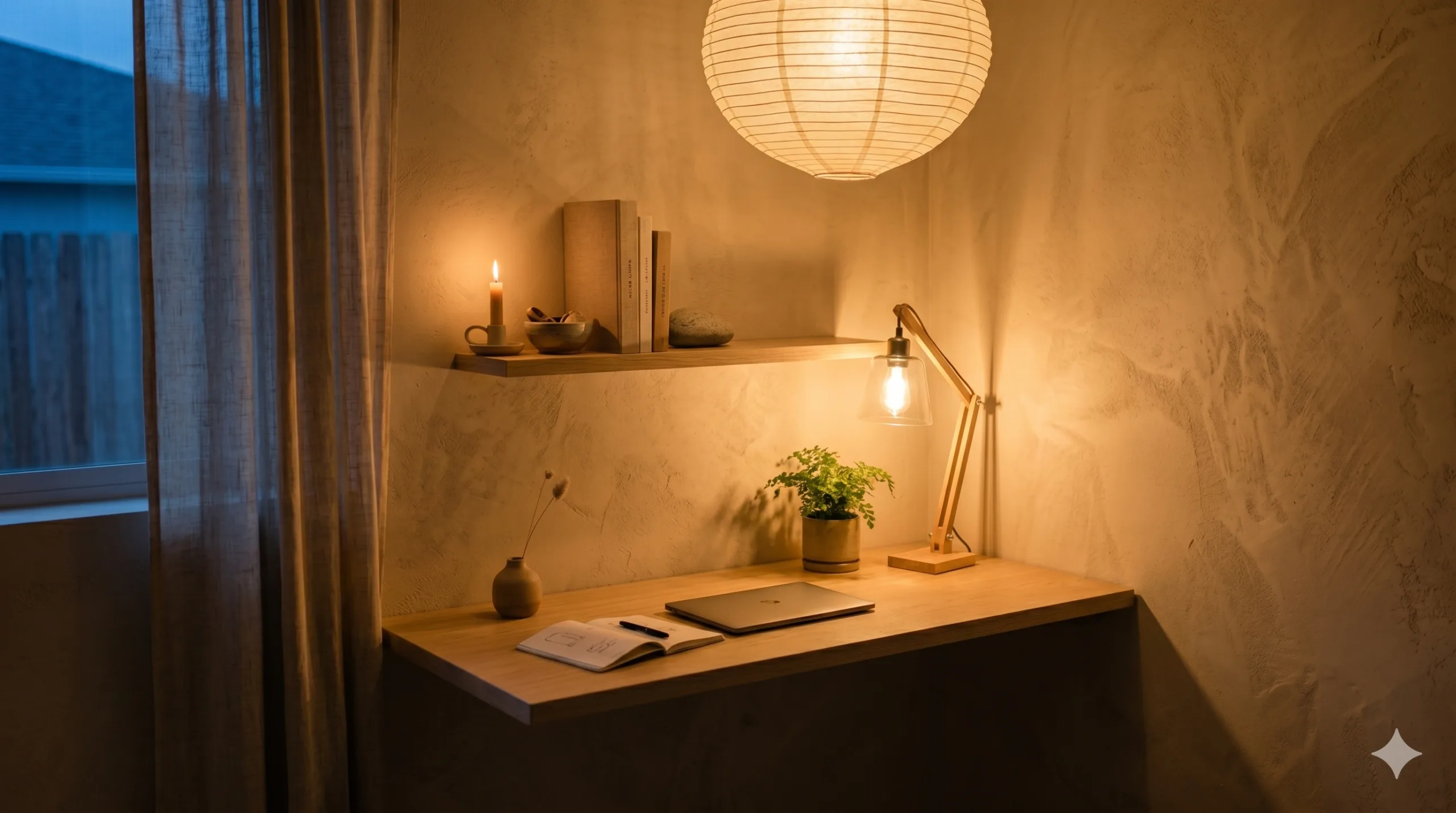
Natural light is the first and best light source for any japandi home office ideas setup. Position your desk perpendicular to the window rather than facing it or having it directly behind you — this gives you even, shadow-free light without screen glare.
For artificial light, layer three sources:
A warm desk lamp — in natural wood or matte black, with a warm 2700K bulb. Positioned to illuminate your work surface without casting harsh shadows.
A pendant or paper lantern — overhead ambient light that fills the room gently. A hand-woven bamboo or rice paper pendant is the most authentically Japandi choice.
A small candle or diffuser — on a shelf or corner of the desk. Not for light, but for atmosphere. The small warm flicker signals to your brain that this is a calm, intentional place.youtube
Avoid cold white LED strips, fluorescent overhead panels, and any lighting above 4000K — they create a clinical energy that works directly against the Japandi spirit.
Japandi Home Office on a Budget: Calm for Less
The most calming japandi home office ideas are often the most affordable, because Japandi editing is free. Here are eight budget strategies that genuinely work:
1. Sand and oil an old wooden desk instead of buying new — natural beeswax or linseed oil restores any wood surface for under $15.
2. Replace your office chair cushion with a linen cover in warm beige — instant warmth for under $20.
3. Add a paper lantern pendant from IKEA or Amazon — under $30 and immediately transformative.
4. Use a linen storage box from IKEA (TJENA series) to hide cables, chargers, and clutter.
5. Place one plant on your desk — a small snake plant or succulent in a matte terracotta pot costs under $10 and adds calm life to the space.youtube
6. Print one artwork in muted tones and frame it in a simple oak frame — a $5 print can feel like a $200 piece when framed well.
7. Remove everything that is not essential from your shelves — this costs nothing and creates the most visible Japandi transformation.
8. Replace your mouse pad with a natural cork or wood desk mat — warm, tactile, and deeply Japandi for under $25.
Small Space? Turn Any Corner Into a Japandi Study Room
You do not need a full room for a beautiful japandi home office. Some of the most serene workspaces in the world are carved from a single quiet corner.
Choose the corner with the best natural light. Mount one floating shelf above for books and one ceramic piece. Place a slim desk below — 80 cm wide is enough. Add a warm desk lamp, one plant, and linen curtains on the nearest window. Keep the wall above the desk bare or with one single artwork.
The trick for making a corner feel like a dedicated workspace is visual separation: a small rug under the desk chair, a different wall color behind the desk (even one painted panel in warm greige), or a floating shelf that frames the space from above. These small gestures tell your brain: this is a place of calm focus.
FAQs: Japandi Office Design, Desk Setup & Productivity
What are the best japandi home office ideas for a very small space?
A wall-mounted floating desk in light oak, one shelf above, a warm desk lamp, and one plant. Keep the floor clear and the wall above simple. That is enough
What wood is best for a Japandi desk?
Light birch and ash for Scandinavian warmth, walnut and teak for Japanese depth. Both work beautifully — choose based on the warmth level you want
How do I hide cables in a Japandi workspace?
Use natural fiber cord sleeves, route cables behind the desk, and keep all chargers in one woven basket or linen box out of sight
Can I use color in a Japandi home office?
Yes — one quiet accent only. Sage green, clay, or muted charcoal as 10% of the palette. Everything else stays neutral and warm.
What plant works best in a Japandi office?
Snake plant, peace lily, bonsai, or a small pothos. All are low-maintenance, air-purifying, and deeply aligned with the Japandi spirit.
Clear your home, clear your head. Less clutter. More meaning
See also: serenehomespace.com
Pinterest : serenehomespace
